


 English (English)
 Deutsch (German)
 Čeština (Czech)
 Italiano (Italian)
 Hrvatski (Croatian)
 Română (Romanian)
 български език (Bulgarian)
 Magyar (Hungarian)
 Español (Spanish)
 Français (French)
 Nederlands (Dutch)
 Polski (Polish)
 Slovenčina (Slovak)
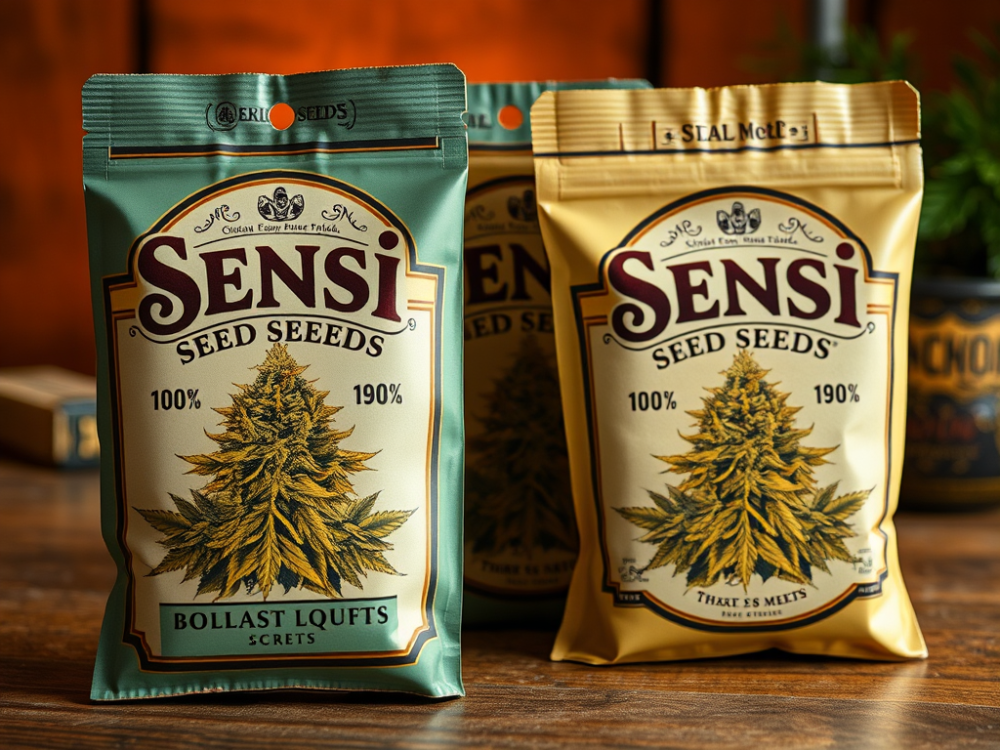
Sensi Seeds bank – three words that, in the cannabis growing community, evoke respect, history and dozens of iconic strains. Few brands have shaped an entire industry as profoundly as this Dutch institution, founded in the mid-1980s and still setting the standard for the art of breeding today. In this article, we look at where Sensi Seeds began, why their strains remain a global benchmark and what this seed bank has contributed to the cannabis movement as a whole.
Birth of a legend: Amsterdam 1985
The story begins in 1985 in Amsterdam, where Ben Dronkers – a maritime trader and passionate plant collector – brought back rare cannabis genetics from his travels across Asia and the Americas, genetics that no one in Europe had previously preserved in a systematic way. He decided to protect them, cross them and preserve them for future generations. That is how Sensi Seeds bank came into being, the world's first truly international cannabis seed bank.
At the time, Amsterdam was a unique place. The gedoogbeleid policy (a policy of tolerance) allowed coffeeshops to operate in a legal grey zone, which turned the Netherlands into a magnet for breeders from all over the world. Ben Dronkers made the most of this opportunity – he began building a genetic library unlike anything Europe had seen before.
The cannabis museum: a side project that outgrew everything
To share his passion with the public, Dronkers opened the legendary Hash, Marihuana & Hemp Museum in Amsterdam – the first museum of its kind in the world. What started as a modest exhibition became a globally recognised institution documenting the historical, cultural and industrial uses of cannabis. The museum is still open today, underlining just how seriously Sensi Seeds take public education.
Breeding philosophy: genetics as heritage
What sets Sensi Seeds apart from dozens of competing seed banks? Above all, their approach to genetic material as an irreplaceable heritage. While many breeders focus primarily on commercial potential, Sensi Seeds have from the very beginning sought to preserve original landrace strains – that is, the original wild-growing populations from Afghanistan, India, Mexico, Colombia and other regions.
- Landrace genetics – the foundation of all modern hybrids, preserved in their original form
- Strain stabilisation – years of backcrossing for predictable traits
- Documentation – every strain is carefully described and archived
- Continuity – the work is passed down from generation to generation within the Dronkers family
This approach has borne fruit in the form of strains that have stood the test of time. While trends in cannabis breeding come and go, the Sensi Seeds classics have remained relevant for decades.
Top strains that changed the world: Northern Lights, Skunk and Jack Herer
Any conversation about Sensi Seeds bank inevitably turns to three names that are synonymous with quality. Each of these strains has its own story that goes far beyond mere botany.
Northern Lights – the queen of indicas
Northern Lights is probably the most famous indica strain of all time. Its roots go back to the US state of Washington, from where Dronkers brought it to Amsterdam and refined it further. The result is a strain with exceptionally compact growth, a short flowering time and dense, resinous buds.
- Dominance: indica
- Flowering time: 7–8 weeks
- Yield: above average, even in more demanding conditions
- Profile: earthy, resinous aroma with slightly sweet undertones
- Awards: winner of the first Cannabis Cup in history (1988)
Northern Lights became the foundation for dozens of other hybrids – its genetics run through the veins of strains all over the world. If you would like to know how to grow such a strain as successfully as possible, read our guide 7 simple steps to growing cannabis successfully.
Skunk #1 – a revolution in breeding
Skunk #1 is a three-way hybrid combining genetics from Afghanistan, Colombia and Mexico. When it was created, it was a groundbreaking project – no one had previously crossed three such different landraces in a systematic way with the goal of creating a stable, easy-to-grow hybrid suited to European conditions.
The name “skunk” refers to the distinctive, pungent aroma the strain produces. Today this is seen as a characteristic strength, but in the 1980s it came as an unexpected surprise to many growers. Skunk #1 became the mother strain for a whole range of modern hybrids, and its influence on breeding in the 1990s and 2000s can hardly be overstated.
- Dominance: sativa/indica hybrid (65% sativa, 35% indica)
- Flowering time: 8–9 weeks
- Yield: one of the highest among the classic strains
- Profile: sharp, earthy, with fruity accents
Jack Herer – a living tribute to a pioneer
Named after the legendary American activist and author of The Emperor Wears No Clothes (1985), this strain is perhaps the most ambitious breeding project Sensi Seeds have ever undertaken. Jack Herer combines haze genetics with a Northern Lights #5 and Shiva Skunk hybrid – the result is an exceptionally aromatic, cerebral sativa with a fast onset of effects and a characteristic spicy, resinous profile.
In the Netherlands, the strain was granted medical cannabis status and became the only plant strain to receive this recognition within the Dutch pharmaceutical system. It is a symbol of how breeding precision and ideological commitment can go hand in hand.
- Dominance: sativa
- Flowering time: 9–10 weeks (indoor), also suitable for outdoor growing in a Central European climate
- Yield: medium to high
- Profile: pine, spicy and citrus notes
- Awards: 9× Cannabis Cup winner
If you are interested in how to care for your plants properly throughout the growing cycle, take a look at our article on pruning cannabis: the difference between topping and classic pruning.
Sensi Seeds' contribution to the cannabis movement
It would be an oversimplification to see Sensi Seeds merely as a commercial seed seller. Their real contribution lies on a cultural, scientific and political level.
Education and destigmatisation
Through the museum, their own online magazine and educational materials, Sensi Seeds have worked systematically for decades on the destigmatisation of cannabis. At a time when most media wrote about cannabis exclusively in the context of crime, they provided science-based information about the history, botany and uses of the plant.
Genetic archiving as a public service
Collecting and preserving original landrace genetics is not just a business strategy – it is a rescue mission. Many original cannabis populations are dying out in their natural habitats today due to climate change, agricultural pressure and prohibition. The Sensi Seeds gene bank preserves dozens of genetics that would otherwise be lost forever.
Political activism
Ben Dronkers and Sensi Seeds have never hidden their political convictions. They actively support drug law reform in Europe and worldwide, fund research and lobby for a science-based approach to cannabis regulation. Their voice is heard in the debate on the future of the cannabis industry, as the topic discussed in our article the future of the cannabis industry: the professionalisation of cannabis cultivation also shows.
Sensi Seeds today: four decades of innovation
After almost forty years on the market, Sensi Seeds still rank among the very best in global breeding. Their catalogue includes more than 500 strains – from classic feminised and regular seeds to autoflowering varieties and CBD-rich lines.
What Sensi Seeds offer today
- Regular seeds – ideal for breeders who want to work with both male and female plants
- Feminised seeds – guaranteeing exclusively female plants for maximum yield
- Autoflowering strains – flowering independently of the photoperiod, suitable for beginners
- CBD strains – with a low THC content and a high cannabidiol content, intended for specific uses
The breeding team is now led by Dronkers' son Jerase, who continues his father's work using modern methods of genomic analysis. Traditional craftsmanship and science go hand in hand.
Awards and the Cannabis Cup
The list of prizes that Sensi Seeds strains have won at the prestigious Amsterdam Cannabis Cup and other international competitions would be enough for a separate article. Suffice it to say that no other seed bank comes close to their total number of wins. That is no coincidence – it is the result of systematic breeding work and an uncompromising commitment to quality.
Why the Sensi Seeds legacy matters to you too
You may be asking yourself: why should I, as a grower or cannabis enthusiast, care about the history of one particular seed bank? The answer is simple – in all likelihood you have already come into contact with Sensi Seeds genetics without knowing it. Northern Lights, Skunk #1 and Jack Herer are present in the genotype of hundreds of modern strains available on the market. They are part of the genetic heritage that shapes the results of your growing work.
Understanding where strains come from, what is in their DNA and how they were bred will help you better understand what you are growing and adapt your plant care to their natural characteristics. Watering, pruning, light cycle – everything should be based on knowledge of your strain's genetic foundation. For inspiration, we also recommend our detailed guide to watering cannabis: how to grow from seed at home.
Sensi Seeds bank is not just a seed seller. It is a living institution that for four decades has protected, spread and explained the value of cannabis in all its complexity – botanical, cultural and historical. And that is precisely where their real, lasting contribution lies.
You might also be interested in: Autoflower vs. feminised vs. regular – a complete comparison