


 English (English)
 Deutsch (German)
 Čeština (Czech)
 Italiano (Italian)
 Hrvatski (Croatian)
 Română (Romanian)
 български език (Bulgarian)
 Magyar (Hungarian)
 Español (Spanish)
 Français (French)
 Nederlands (Dutch)
 Polski (Polish)
 Slovenčina (Slovak)
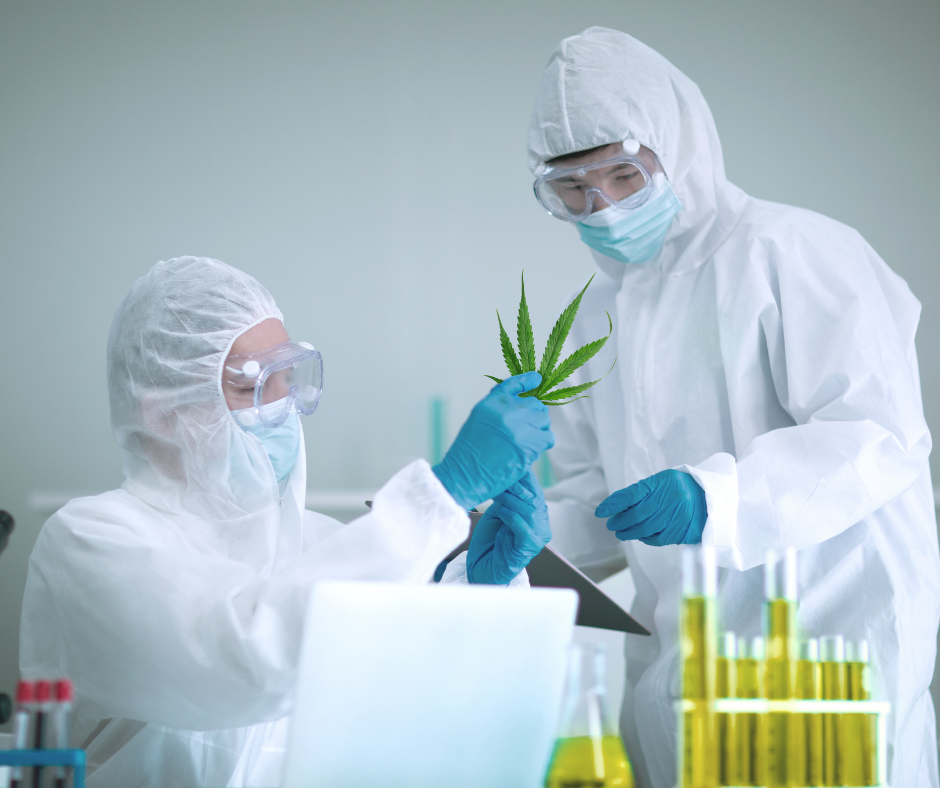



- To date, an inexhaustible amount of research into the effects of cannabis has been carried out, and it is understandably difficult for laypeople to find their way through it
- That is why today we will look at the most important milestones in understanding the effects of cannabis, as well as the historical events that inevitably led to them
It is important to realise here that data from cannabis research are always only half the story - they can be true or they can be misleading. Before we get into truly high-quality research offering valuable insights into the therapeutic spectrum of cannabis, let us look at an absolutely typical unfounded “proof” that anti-cannabis propaganda tried to drum into the heads of potential consumers throughout the last century.
Demystifying the effects of medical cannabis
The story of quite possibly the most misleading “proof”, which was used for a long time to damage the image of medical cannabis, begins in 1974, when Dr Robert Galbraith published the results of a study carried out at Tulane University. Dr Galbraith is today a well-known controversial figure in the field of neurology. He built his reputation mainly through his enthusiasm for “shock therapy”, in which he used electric shocks to achieve stimulation deep in the brain. Using this method, Galbraith tried, for example, to convert homosexuals “back” into heterosexuals.
Dr Galbraith also willingly took part in secret experiments run by the CIA at the time, during which illegal tests were carried out with a hallucinogenic drug called bulbocapnine in an attempt to invent a highly effective ‘brain washer’. At that time, however, Galbraith's reputation remained untarnished.
So when, shortly afterwards, the results of Galbraith's study on the effects of cannabis came to light, the media dutifully took up the task and proudly published articles with headlines such as “THC kills brain cells” or “Marijuana causes brain damage”. Moreover, as you can imagine, the articles were presented as factual statements without a drop of scepticism. Meanwhile, the then US President Ronald Reagan also seized on the results and immediately began to claim that the legalisation of cannabis was out of the question, not even remotely.
"The results of this research were, of course, deeply flawed. For example, in the book 'Smoke Signals: A Social history of Marijuana' the author Martin Lee examines this study and calls it 'a typical scientific fraud'":
“Monkeys with tightly strapped-on gas masks, which were forced to inhale an average of 63 cigarettes of highly potent marijuana every five minutes. Lo and behold - the result of the study was severe brain damage in the monkeys. Of course, Galbraith attributed these results to the effects of marijuana and did not even think to mention suffocation due to lack of oxygen and carbon monoxide poisoning.”
Galbraith's findings were fortunately never replicated, and several subsequent prominent studies fundamentally refuted his results.
Another fundamental change in the narrative came in 2003, when the US Department of Health and Human Services received a patent on “cannabinoids & neuroprotectants”, based on evidence of the ability of substances derived from cannabis which, on the contrary, may help to “...protect the brain against the consequences of brain trauma such as stroke, injury, neurodegenerative diseases such as Alzheimer's disease, Parkinson's and dementia caused by HIV.”
Indian Hemp Drugs Commission (1894)
In 1893, India was under British rule. The colonial government of the time became concerned about the amount of cannabis (then called “hemp drugs”) that the local population consumed on a daily basis. It was therefore decided that it was time to send teams of British and Indian doctors across the whole country to find out what effect hemp drugs had not only on health but also on the morals of society.
The result was a massive research study of more than 3,000 pages containing authentic records of over 1,200 “yogis, doctors, fakirs, asylum superintendents, villagers drinking bhang, smugglers, army officers, cannabis dealers, managers of ganja palaces and representatives of the clergy of the time.” All the data collected in this seven-chapter dataset led the researchers to two fundamental conclusions: “moderate use of cannabis is harmless, if anything beneficial, and its prohibition would be a fundamental violation of justice.”
The researchers concluded the study as follows: “Banning or even substantially restricting public access to such a useful herb as cannabis could cause widespread suffering in society, as well as great resentment of the government's actions."

Propaganda against cannabis vs “La Guardia Report” (1944)
The period of disinformation led mainly by Harry J. Anslingerem (head of the then US Federal Bureau of Narcotics) and propaganda films such as “Reefer Madness” prompted a firm and dissenting response from the Mayor of New York, Fiorella La Guardia, who commissioned a team of, at the time, prestigious doctors, psychiatrists, psychologists, pharmacologists, chemists and sociologists with the aim of a complete review and investigation of all available scientific literature on the effects of cannabis.
The results of the review were published under the title “La Guardia Report”. The study immediately gained enormous respect in academic circles and received a prestigious award from the New York Academy of Medicine.
“The final conclusion drawn from the data of the La Guardia Report states that the prohibition of cannabis is an unequivocal and clear failure.”
“Marijuana, like alcohol, does not bring about permanent changes in the fundamental personality,” the researchers conclude in the study. “Marijuana in itself does not cause antisocial behaviour. Furthermore, there is no evidence that regular use of marijuana leads directly to subsequent use of opiates. Long-term use of cannabis does not lead to physical, mental or moral degeneration. On the contrary, we can conclude from the results that substances derived from marijuana plants may in certain cases offer potential therapeutic benefits that deserve further thorough research.”
Study 1: Discovery of the THC molecule (1964)
In 1964, at the moment when a team of Israeli scientists led by Dr Raphael Mechoulam first identified and described the molecule of THC as the primary psychoactive substance contained in medical cannabis plants, there was not only a fundamental shift in the understanding of the effects of marijuana, but also a series of subsequent realisations about how we understand the functioning of the entire human body.
The discovery of THC led scientists to the crucial discovery of a previously unidentified bodily system - the endocannabinoid system - which can be regarded as a kind of regulatory operating system whose function is the proper regulation of all other bodily systems and the maintenance of their mutual balance.
If you are interested in the functions and details of the endocannabinoid system, you can go to one of our previous articles “The endocannabinoid system for beginners”. This discovery naturally also led to further studies examining effects against various diseases.

Study 2: Cannabis shrinks tumours (1974)
Paradoxically, the original aim of the 1974 study, which demonstrated the positive effect of cannabis substances on tumour growth, was to prove that cannabis damages the immune system. The study, sponsored by the National Institute on Drug Abuse (NIDA) and the American cancer research organisation, took place at the University of Virginia, where researchers artificially implanted tumours into the bodies of laboratory mice and then “treated them with delta-9-THC for 10 consecutive days, starting from the first day of tumour implantation.”
“The aim was to prove that THC accelerates the growth of tumour cells. However, the opposite was true.”
The results of the study were subsequently published in the scientific journal “The Journal of the National Cancer Institute” and clearly described how “THC and CBN helped reduce the overall size of tumours in mice treated for 20 days.” Great and progressive results, wouldn't you say?
The authors of the study were thrilled with the results and were already looking forward to launching the next phase of the investigation. To their disappointment, however, they were informed that NIDA was ending all further funding and, not only that, was actively trying to obscure and suppress the results of the first study. In the end, the only publication mentioning the possible slowing of tumour cell growth by cannabis was a short article in the Washington Post, published on 18 August 1974.
An almost unbelievable three decades passed before any researcher dared to follow up on this “godforsaken” study. Fortunately, the task was taken up by Dr Manuel Guzman, professor of biochemistry at the University of Madrid. His research not only built on the previous study but was also able to replicate its results.
“The 2000 issue of the journal Nature Medicine contains a report by Dr Guzman in which he describes the function of cannabinoids and their positive effect on shrinking tumours in laboratory mice. Not only that – THC shrank the tumours without damaging the adjacent healthy tissue.”

Study 3: Cannabis treats chemotherapy-induced nausea (1975)
Another of the significant historical cannabis studies of the past is the discovery of the now renowned Dr Lester Grinspoon, who, again paradoxically, initially tried to prove that marijuana is harmful. Grinspoon was specifically worried about his close friend, the world-famous astronomer Carl Sagan, who was in the habit of smoking considerable amounts of cannabis on a daily basis.
“Shortly after starting his research, however, Grinspoon realised that his existing knowledge of and bias against cannabis were merely the result of long-term government propaganda. He summarises this realisation in the bestseller Marihuana Reconsidered (1971).”
Ever since Grinspoon “saw the light”, he has championed cannabis and become one of the strongest voices and advocates of this herb worldwide. Grinspoon even had the opportunity to observe the therapeutic effects of cannabis in his own son, who was diagnosed with leukaemia at the age of 15. He describes this story in detail in his personal essay recounting his lifelong experience with this plant:
“A normal day after chemotherapy looked something like this: as soon as we left the hospital, we hoped Danny would make it home before he inevitably threw up. At home we always had to put a bucket for vomit by his bed. One day, however, I told Danny to take a few puffs from my stash before the therapy. On the way home, Danny turned to his mum and says ‘Mum, do you want to stop at that sub shop in Brookline? They have that good sandwich...’ I just sat there thinking ‘Wow’.”
"Dr Grinspoon eventually convinced the head of a children's hospital in Boston in 1975 to carry out a cannabis study in the oncology department. That year, the effectiveness of cannabis THC in helping against nausea and vomiting caused by chemotherapy was demonstrated for the first time."
Study 3: Cannabis helps against AIDS without side effects (1997)
During the crisis, when many AIDS cases were breaking out at once, a nurse with the very fitting name of Mary Jane Rathburn worked as a volunteer at a local hospital. On her regular rounds of the hospital wards, Mary Jane secretly handed out homemade cannabis brownies to patients.
Word of Mary Jane's efforts naturally spread over time and eventually caught the attention of a leading oncologist at San Francisco General Hospital, Dr Donald Abramse. Abrams decided that he would replicate what he had seen with his own eyes in an official scientific study. Specifically, the fact that medical cannabis is able to help patients suffering from the nausea often associated with AIDS treatment.
Finally, in 1997, after a long and bitter battle with the US federal government, Dr Abrams finally received a one-million-dollar grant to carry out a clinical study aimed at demonstrating the safety of cannabis cannabinoids when used against HIV infection. Thanks to Abrams' efforts, a whole chain of studies came to light explaining that the use of cannabis in HIV:
-
Does not increase the viral load in patients' bodies
-
Does not damage patients' immune systems
-
Does not have a negative effect on protease inhibitors
-
Has a positive effect on weight gain and appetite
Study 4: Cannabis does not cause lung cancer (2006)
When it comes to medical cannabis and its effect on the lungs, you would be hard pressed to find a more knowledgeable expert than Dr Donald Tashkina, a prominent pulmonologist at the University of California, who has been studying this very issue for more than 40 years. Dr Tashkin was, however, at first certainly not someone you would call a “cannabis advocate”. Quite the opposite - during his first research Tashkin stated that smoke from cannabis plant material leaves carcinogenic tar particles in the lungs and then, understandably, concluded that cannabis smoke causes significant damage in the lungs.
In 2006, however, a broader and more significant follow-up study took place, during which, to Tashkin's surprise, it emerged that cannabis by no means causes lung cancer, not even in cases of chronic heavy use.
As Tashkin himself says, “...the results of this study went against all our expectations. Our hypothesis was that there would be a positive correlation between cannabis smoking and the incidence of lung cancer, and further that higher cannabis consumption would lead in direct proportion to a higher incidence of lung cancer.”
Thanks to the many years of work by Dr Tashkina, it has therefore not only emerged that smoking cannabis, contrary to logical assumptions, does not cause lung cancer, but there are also indications that it quite possibly has significant medicinal properties.

Study 5: Cannabis reduces the number of painkiller overdoses
The opioid crisis plagues the United States in particular, where the use of painkillers is among the most common causes of overdose deaths. As for the media narratives, you will mostly hear either that cannabis use is a gateway to taking opioids or, conversely, that marijuana can be used as a supplement to or substitute for painkillers.
If you would like to learn more about the use of medical cannabis against pain or as a substitute for opioid painkillers, you can go to these articles:
-
Medical cannabis and the fight against the opioid epidemic
Study 6: Cannabis in the therapy of PTSD (Post-traumatic stress disorder)
The leading role in research into the therapeutic potential of cannabis against PTSD is played by Dr Sue Sisley. Dr Sue's story began to gather pace in 2014, when she was suddenly dismissed from her long-standing faculty position after her efforts to research cannabis and PTSD turned into a political matter.
Sisley fortunately did not give up so easily and continues her work as a member of the Multidisciplinary Association for Psychedelic Studies (MAPS). You can go into more depth on medical marijuana and post-traumatic stress disorder in the article “Cannabis and the treatment of PTSD: Post-traumatic stress disorder”.
Study 7: Cannabis against seizures and epilepsy (ongoing)
The turning point in cannabis treatment and its use against epileptic seizures came when little Charlotte was first prescribed an oil with a high content