


 English (English)
 Deutsch (German)
 Čeština (Czech)
 Italiano (Italian)
 Hrvatski (Croatian)
 Română (Romanian)
 български език (Bulgarian)
 Magyar (Hungarian)
 Español (Spanish)
 Français (French)
 Nederlands (Dutch)
 Polski (Polish)
 Slovenčina (Slovak)
In short: For most users, the most versatile option is a medium-sized glass bong of around 30 cm made of borosilicate glass with 4–5 mm walls and a 14 mm joint. Silicone is ideal for travel, acrylic for a tight budget. Change the water after every use and clean the bong thoroughly at least once a week.



| Size categories | small up to 25 cm, medium 25–45 cm, large over 45 cm |
|---|---|
| Choice for beginners | glass bong 25–30 cm, 14 mm joint, no percolator |
| Thickness of quality glass | at least 4–5 mm |
| Common joint sizes | 14 mm and 18 mm |
| Care frequency | change the water after every use, thorough cleaning at least 1× a week |
| Cleaning glass | isopropyl alcohol 90 %+ and coarse salt, shake for 1–2 min, leave to soak for 10–15 min |
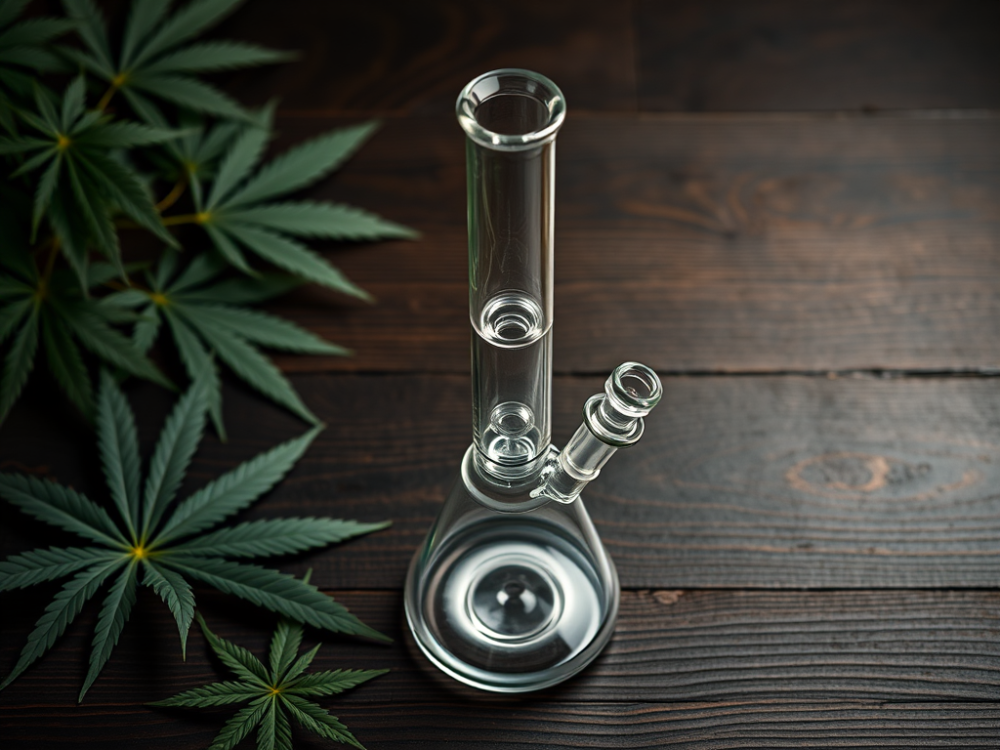
The bong is one of the most popular smoking accessories around the world. Whether you are a beginner who doesn't know where to start or an experienced user looking for an upgrade, this guide will help you find your way around materials, sizes, percolators and proper care of your piece. Everything clearly in one place.
What is a bong and how does it work?
A bong is a water pipe used to filter and cool smoke through water. The principle is simple: you light the material in the bowl, the smoke travels through the downstem into the water, where it cools down and loses some of its impurities, and then rises up the tube straight to your mouth.
Thanks to water filtration, the resulting smoke is noticeably smoother than, for example, when smoking a joint, spliff or blunt – an ideal choice for anyone sensitive to harsh smoke.
The basic parts of every bong are:
- Body (tube) – the main cylinder where the smoke collects
- Base – the water chamber; it can be round, flat or vase-shaped
- Downstem – the small tube that carries the smoke below the water surface
- Bowl – the small container in which the smoking material is placed
- Carb (carb hole) – an opening for regulating airflow (on some models)
Types of bongs by material
Choosing the right material is the first and most important decision. Each has its pros and cons – it depends on where and how you use your bong.
Glass bong
Glass is clearly the most popular and most prestigious material. Borosilicate glass (the same type used in laboratory equipment) withstands temperature changes and leaves no aftertaste in the smoke.
- ✅ The cleanest smoke flavour
- ✅ Aesthetically appealing, available in dozens of designs
- ✅ Easy to clean – you can see where the dirt is
- ❌ More fragile – it can break if dropped
- ❌ Higher price for quality pieces
Glass bongs are ideal for home use, where they don't need to be carried around often.
Acrylic bong
Acrylic (plexiglass) was for many years the most affordable material on the market. Today it is slowly being replaced by silicone, but it still has its place – mainly thanks to its low price.
- ✅ Very low price
- ✅ Shatter-resistant
- ❌ Gradually absorbs odours and colours
- ❌ Poorer flavour experience compared to glass
- ❌ Harder to clean – not suitable for alcohol
An acrylic bong is a good choice as a first piece or for festivals and events where you don't want to risk breaking expensive glass.
Silicone bong
Silicone is the newest and fastest-growing category. Food-grade certified silicone is safe, practically indestructible and surprisingly easy to clean – many models can go straight into the dishwasher.
- ✅ Practically unbreakable – ideal for travel
- ✅ Flexible and easy to store
- ✅ Easy maintenance
- ❌ Slightly poorer flavour than glass (with cheap models)
- ❌ Less aesthetic look
If you travel a lot or are known for breaking things, a silicone bong is the obvious choice.
How to choose the right bong size?
The size of a bong has a major impact on the intensity of the experience and on how practical it is to use. As a general rule: the bigger the bong, the more smoke you take in with one hit.
Small bongs (up to 25 cm)
Compact, portable and discreet. They are great for individual use and quick sessions. Less water means less filtration, so the smoke may be a bit harsher.
Medium bongs (25–45 cm)
The most popular category. It offers a good compromise between filtration, smoke volume and ease of handling. Most beginners and advanced users alike reach for this format.
Large bongs (over 45 cm)
Massive pieces for demanding users. They excel in maximum filtration and cool smoke, but are not very practical for everyday carrying. They belong rather to the category of collector's pieces or are meant for group use.
Tip: If you are not sure, start with a medium glass bong of around 30 cm – it is the most versatile choice for most users.
Percolators – the heart of a modern bong
A percolator is an additional filtration system inside the bong that diffuses the smoke into many small bubbles. A larger contact surface with the water = better filtration and cooler smoke. Modern bongs offer a whole range of percolator types.
The most common types of percolators
- Diffuser downstem – the simplest option; the bottom of the downstem is perforated. Cheap and effective.
- Tree perc – resembles tree branches with holes at the ends. Excellent filtration, but harder to clean.
- Honeycomb perc – a flat disc with dozens of small holes. Minimal drag, maximum bubbles.
- Showerhead perc – resembles a shower head and diffuses the smoke in a circle. Popular for its easy draw.
- Inline perc – a horizontal tube with slits. Elegant design, less visual clutter.
- Matrix perc – a cylinder covered with holes on all sides. Exceptional filtration for demanding users.
Note: More percolators do not always mean a better experience. Too much filtration can require a stronger draw and may also cause some of the aroma to be lost.
If you are also interested in other consumption methods focused on purity and flavour, read our article on dabbing – what it is and how it works.
How to clean a bong properly?
Regular cleaning is key to flavour, hygiene and the lifespan of your bong. Dirty water and built-up resin spoil the taste and can become a breeding ground for bacteria. We recommend changing the water after every use and cleaning thoroughly at least once a week with regular use.
What you will need
- Isopropyl alcohol (ideally 90 %+) – for glass bongs
- Coarse salt (table or sea salt)
- Hot water
- Special bong cleaning brushes
- Zip-lock bags or bowls for smaller parts
- Alternatively: commercial bong cleaning solutions
Cleaning a glass bong step by step
- Pour out the old water and take the bong apart (bowl, downstem, body).
- Put the smaller parts (bowl, downstem) into a zip-lock bag and add alcohol and coarse salt.
- Seal the bag and shake it thoroughly for 1–2 minutes.
- Pour alcohol and salt into the body of the bong, cover the openings (e.g. with your palm or foil) and shake as well.
- Leave it to soak for 10–15 minutes if it is very dirty.
- Rinse everything thoroughly with hot water – the alcohol must be completely removed.
- Dry it and let it air-dry before the next use.
Tip for silicone bongs: Many silicone models are dishwasher-safe – check the manufacturer's instructions. Avoid using too much alcohol on silicone – it can gradually degrade the material.
Tip for acrylic bongs: Do not use alcohol; instead, reach for special cleaning products or a hot soapy solution.
Recommended models and what to watch out for when buying
There are hundreds of models on the market and finding your way around can be confusing at first. When choosing a bong, we recommend focusing on these parameters:
- Glass thickness – quality glass bongs have walls of at least 4–5 mm. Less = higher risk of cracking.
- Joint size – the most common are 14 mm and 18 mm. Standardisation makes it easier to swap bowls and accessories.
- Base stability – the wider and heavier the base, the lower the risk of tipping over.
- Downstem quality – ideally glass and easy to replace.
- Material certification – for silicone models, look for the food-grade silicone label.
Tips for different types of users
- Beginner: A simple glass bong of 25–30 cm without a percolator, borosilicate glass, 14 mm joint. Price approx. 500–1,200 CZK.
- Regular user: A medium glass bong of 30–40 cm with a honeycomb or showerhead percolator. Price approx. 1,200–2,500 CZK.
- For travel: A silicone bong with a glass bowl and downstem. Price approx. 400–900 CZK.
- Enthusiast / collector: A large hand-blown glass bong with multiple percolators from renowned manufacturers. Price 2,500 CZK and up.
If you are interested in more tips on how to get the most out of your consumption while saving money, take a look at our article 5 tricks to save money on marijuana – the practical advice applies to bong users too.
Summary: How to choose the right bong?
Choosing a bong is a very individual matter. There is no single right answer – it depends on your preferences, how you use it and your budget. For clarity, here are the basic recommendations:
- Just starting out? → A medium-sized glass bong without a percolator.
- Travel a lot? → A silicone bong.
- Want the best flavour? → Quality borosilicate glass, a simple design without unnecessary parts.
- Love technology and experimenting? → Explore the world of percolators – honeycomb and matrix percs are a great start.
- Low budget? → An acrylic bong as a temporary solution, then invest in glass.
And don't forget: regular cleaning will extend the life of your bong and ensure you always enjoy the best possible experience. Looking for accessories and equipment? Browse the full range in the Grow equipment category at Cannapio.cz.
You might also be interested in: Glass bongs – why you should get a glass bong