
Cancer
Cancer or tumor disease can affect anyone. Today's fast-paced and stressful life contributes to its development. It can appear at any age. Its occurrence is influenced by an unhealthy lifestyle and diet, excessive alcohol consumption, smoking, etc. In the Czech Republic alone, around 27,000 people succumb to this disease annually.
Cancer can be divided into two types. The first are carcinomas, tumors developing on the external or internal body surface, and the second are sarcomas, tumors arising in cells inside the body. Even at this stage, we can see that the issue of cancer is not simple, and thus its treatment is equally complicated.
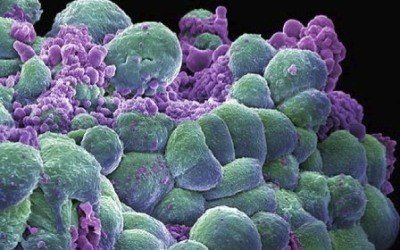
Recently, there has been much discussion about a substance that could help in its treatment. The first to conduct a clinical study on the anti-tumor effects of THC on humans was Manuel Guzman with his team. He administered THC to patients who were no longer responding to traditional treatment. He managed to reduce the proliferation of tumor cells.
Another study conducted at Harvard reports that THC plays a role in stopping lung cancer. The difference between traditional chemotherapy and THC extract treatment is that chemotherapy destroys all cells. Whereas THC kills tumor cells without damaging healthy ones.
Most of the Population at Risk
Cancer is one of the most common serious diseases that can affect any of us. For example, in the USA, cancer is diagnosed in 39% of the population at some stage of life.
Oncologists, more than any other doctors, are advocates for the use and implementation of medicinal cannabis in cancer treatment. However, the situation related to cannabis illegality and the corresponding approach of many governments today significantly slows down further research that needs to be done to optimize cancer treatment using cannabinoids.
For example, the US federal government, despite many cases where cannabis has significantly relieved or completely eliminated symptoms of cancer, still does not recognize cannabis as a drug with therapeutic potential and classifies it as a first-class drug, along with truly dangerous substances like heroin. On the other hand, we have stubborn "charlatans" who present cannabis as a cure-all that can supposedly heal anything.
So where is the truth?
Brain Tumor Treatment
The most aggressive and common type of brain tumor in humans is Glioblastoma multiforme. Life expectancy with this type is estimated at half a year to a year.
Current treatment with surgical removal and radiotherapy is ineffective. Cannabinoids can therefore play an important role here, protecting astrocytes (cells belonging to the neuroglial group). The target of cannabinoids are cancer cells in the brain. By stimulation with cannabinoids, tumor growth is suppressed and the cell viability of Glioblastoma multiforme is significantly influenced. Experiments on glial cells have shown that incubation with cannabinoids induces cell death. Healthy brain cells remain untouched.
Currently, strategies are focused on optimizing the anti-cancer effectiveness of cannabinoids. Before administering the substance to a patient, it is preceded by lengthy research. It is officially used only to treat severely ill or dying people, and only in a few states.
However, it is important to realize that this plant is not all-powerful, and what helps one person may not help another. This is associated with other criteria such as patient's age, gender, health condition, stage of the disease, variety used, etc.). So for some, it slightly or more improves their health condition, and for some, it helps to completely cure the disease.
Current legislation in the Czech Republic does not allow growing marijuana for self-treatment purposes.
Side Effects of Cancer Treatment
Cancer treatment itself causes side effects. These include anorexia, cachexia, vomiting, severe pain, or sleep problems. Anorexia, which arises as a result of loss of appetite and is often accompanied by cachexia (disproportionate loss of weight, muscles, and fats), can be prevented by administering THC, which helps increase appetite.
Anti-cancer drugs irritate the stomach lining, causing nausea and vomiting. Again, cannabis plays a positive role. It has anti-emetic properties and thus becomes useful in treating cancer patients. It can be administered in various ways, making it suitable for patients who cannot take food. Marijuana seeds that help against nausea can be found here.

Additional benefits of cannabis include the ability to relax tense muscles and thus alleviate pain. It can be used for sleep disorders because cannabis has sedative effects. It is also suggested that components in cannabis have the ability to stop cancer.