
Cannabinoid Cycling
- Cycling of hemp varieties is important for maintaining therapeutic effects
- Studies demonstrate the different effects of THC and CBD
- CBD functions as an endocannabinoid system modulator
Building Tolerance
If you use medical cannabis daily, your body is constantly flooded with the cannabinoid THC and many others, which inevitably leads to tolerance development. When you consume more THC than your body actually needs, changes occur in the cell receptors to which THC binds. More precisely, endocannabinoid receptors become less sensitive, and some completely "shut down".
However, these changes are not permanent, they are just a response of your body to an excess of a certain substance. Receptors reduce their sensitivity to THC because there is an unnecessary surplus in your body.
Generally speaking, a medical cannabis user can easily recognize when tolerance begins to develop. For example, if cannabis helps you relieve pain and suddenly stops working, you can thank tolerance for that.
Advantages of Tolerance
Interestingly, some studies debate certain health benefits of this mechanism. However, studies are still in the preliminary investigation phase, and we'll have to wait for official confirmation.
These benefits are discussed especially in connection with the non-psychoactive but therapeutically very effective cannabinoid CBD. For example, in clinical experiments by GW Pharmaceuticals, which aims to develop a balanced and effective treatment for epileptics based on CBD, it was shown that tolerance development allowed administration of increasingly higher doses, which were consequently more effective.
Another study suggests that the tolerance mechanism for CBD differs from the more familiar THC.
What to Do When Cannabis No Longer Works Like Before?
If you find yourself in a situation where medical cannabis no longer provides the desired effect or even acts negatively, you have a few solutions. First and foremost, it's crucial to take a complete break and "reset tolerance". It's commonly recommended to abstain from cannabis use for at least a week.
Resetting tolerance may not be pleasant, especially if you're used to daily cannabis use over an extended period. Some individuals may even experience mild withdrawal symptoms (more in the article "Cannabis Addiction"), which can be irritating. However, withdrawal symptoms can be avoided by taking more frequent breaks from cannabis application.
There is, however, another solution that many find much more pleasant: cannabinoid cycling.
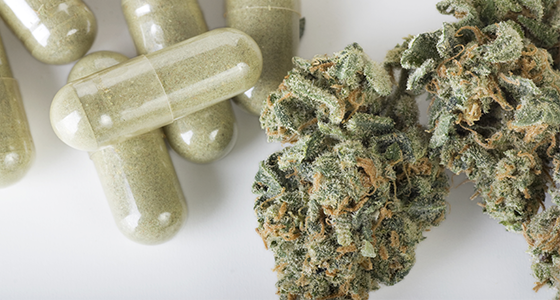
Cycling between THC and CBD
Cannabinoid cycling simply means "switching" between dominant cannabinoids THC and CBD. For example, if you're used to frequently using cannabis varieties with high THC content and low CBD content, it's recommended to switch to the opposite: varieties with high CBD content and low THC content. One example of such varieties are some of the new medically-focused genetics from the Dinafem seed bank, which are available in our offer.
As we know, both substances, THC and CBD, clearly demonstrate therapeutic effects. However, each works through a different mechanism, and switching from one to the other is similar to introducing a new, more effective medication that replaces the older one to which your body no longer responds. Let's briefly explain this mechanism.
THC Effects
The main difference between the mechanisms of THC and CBD is their different action on endocannabinoid receptors (more in the article Endocannabinoid System). THC behaves in the body as a partial receptor agonist. This means it directly acts on our cell receptors and fits into them like a key into a lock.
Simply put, these receptors are just one of many components of the entire endocannabinoid system, which functions as a communication network and helps maintain the internal balance of our body. This very important biological system regulates many human body functions: mood, immune system, metabolism, sleep, reproductive system, and more.
By introducing plant-based THC, we replace the original versions of THC and other endocannabinoids produced by our body, thus changing our biochemistry.
CBD Effects
While THC directly takes the place of original endocannabinoids, CBD behaves quite differently. Unlike THC, it does not bind so much to our receptors but acts more as a modulator and regulator of the endocannabinoid system. Scientists are not yet 100% certain about CBD's mechanism, but they agree that CBD, instead of replacing endocannabinoids in our body, rather regulates their number.
[The rest of the text would continue in the same manner, maintaining the HTML structure and translating naturally.]