
Cannabis and THC in Blood While Driving: Research & Studies
- Today we'll look at a very sensitive topic – driving under the influence of drugs, specifically cannabis, or THC. This article is a summary of existing studies on this subject, compiled by long-time cannabis specialist, David Bienenstock.
"I am a reporter working in the cannabis field for over 15 years. I dare say I've seen and heard everything. All the pros and cons that keep recurring during the legalization debate.
Throughout all this time, when I calmly disarmed all opponents' objections with reasonable and truthful arguments, there was always one compelling counter-argument that cannot be easily dismissed: What if, at the moment of cannabis legalization, a wave of new amateur users starts getting behind the wheel while under the influence?
Of course, legalization opponents regularly use other seemingly convincing counter-arguments. However, the vast majority of them require just a little investigative effort to quickly realize they are not true.
Cannabis is Not a Gateway Drug
A classic example of an argument against cannabis legalization is that cannabis use is a gateway to harder and more dangerous drugs.
Existing studies have repeatedly proven that cannabis use is simply not a gateway to hard drugs, does not create addiction (relative to other drugs, including coffee), does not cause cancer or lung damage, and does not lead to increased violent crime.
Cannabis is certainly not an absolutely harmless drug. If the cannabis plant were transforming its users into crazy heroin addicts with lung cancer, we would of course have reason to worry. As it stands, we now have a real pile of official evidence showing that such cases simply do not occur.
But how does the issue of THC in blood and driving under the influence of cannabis look?
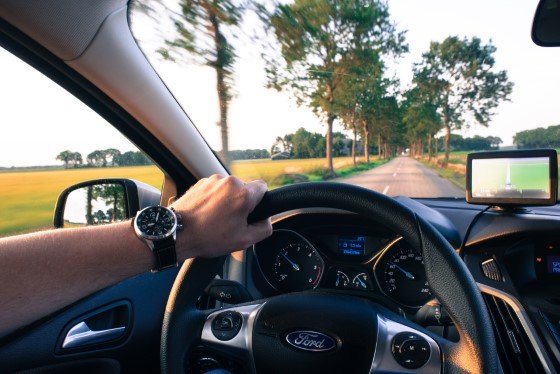
States with Legal Cannabis: Increase in Drugged Driving Cases
The entire debate was recently ignited by statistics measuring the number of traffic accidents in Colorado. The number of driving fatalities associated with drivers under the influence of cannabis has rapidly increased.
Is Legalization to Blame?
Apparently, no one is quite sure about that. Even articles reporting on this issue often mention that 'authorities are unable to confirm that the increased number of deaths is caused by cannabis legalization.'
Why are the authorities, who are usually quick to blame cannabis for a myriad of negative consequences, hesitating here? And what do the newspaper articles mean when they say cannabis is connected to these accidents?
Everything depends on the drug policy settings in the USA. In a report by the Rocky Mountain High Intensity Drug Task Force, you can read that 'cases associated with marijuana' do not necessarily mean that marijuana or medical cannabis are direct causes of the accident. It simply means that THC appeared in the final toxicological report of the case.
This means that if the victim, let's say, took a few hits from a joint a week before their death, their death automatically falls into the category of 'related to cannabis/marijuana'.
THC in Blood and Driving: Facts and Statistics
Before we delve into a deeper analysis of the very confusing science of driving under the influence of cannabis, it's necessary to mention one absolutely basic fact: Driving a vehicle under the influence of any legal or illegal drug is an irresponsible and criminal act.
"Compared to sober drivers, drivers under the influence of THC have a 5% higher chance of an accident. Furthermore, drivers with blood alcohol levels above the average limit (0.08 per mille) have a 225% increased chance of an accident."

So when the press asks, "Can cannabis legalization cause an increase in traffic accidents?" it is immediately a somewhat dysfunctional and anti-cannabis question. After all, no one claims that alcohol legalization causes traffic accidents, right? In the case of alcohol, the drunk driver is rightly blamed, both in court and in public.
Cannabis use increases the risk of a traffic accident, that's clear to everyone. But what dosage are we talking about? And what level of risk? Here, a whole range of different factors come into play. For example, THC-enriched chocolates are not dangerous in terms of potential fatal overdose. However, cannabis-containing edibles are very potent, and a driver under their influence can easily fall asleep at the wheel or daydream, leading directly to an accident. This endangers both the driver and other people.
During cannabis legalization in Colorado, the state set the maximum allowed THC blood limit for drivers at 5 nanograms.
Cannabis While Driving: A New Look at Complete Data
However, let's set aside the notoriously complicated THC testing and determining whether a given driver was actually under the influence of THC or not. New datasets now reveal new and fundamental statistical data:
l From 2013 to 2016, the occurrence of drivers with positive THC tests increased by 145% - from 47 to 115. This certainly doesn't sound good. However, this is a totally misleading statistic. "A positive THC test basically means that the driver still has some THC in their blood, even though they may be completely sober at that moment. The human body is able to get rid of alcohol within a few hours, but THC remains in the blood for days, and even weeks. A THC test can be positive even if the driver last smoked cannabis 3 weeks ago.
If alcohol were treated with the same approach, statistics would speak of 55 to 75% of the adult population (percentage of people consuming alcohol at least once a month) driving under the influence of alcohol. However, a person who last drank alcohol last week is not "drunk" while driving, just as a user with a positive result for cannabis metabolites is not "stoned".
Looking at the complete dataset, it turns out that the percentage of allegedly "stoned" drivers basically mirrors the total percentage of cannabis users in the state.
Context and Relative Risk
A closer look at a 2015 study (NHTSA) is excellent for this topic. The US federal government considers this research the "first large-scale study examining the number of traffic accidents in relation to drug use."
Data during this study was obtained specifically from 3,000 drivers who were responsible for traffic accidents and 6,000 so-called control drivers who had not yet caused any traffic accident. The entire observation took place over a twenty-month period in the state of Virginia.
All collected data was always recorded immediately during the events. Researchers and participating police officers were prepared 24 hours a day, 7 days a week.
Moreover, drivers were considered "under the influence of THC" only when they were measured with an actual active THC blood level at the moment of the accident (not just residual metabolites from cannabis use, for example, a week ago).
A very important finding of this research is that drivers under the influence of THC did have a 5% higher chance of being responsible for a traffic accident, but drivers under the influence of prescription pain opioid medications had a 15% increased chance of an accident.
Increased Chance of Traffic Accidents: Drugs & Alcohol
Even the shocking difference between data on drivers under the influence of opiates and cannabis are completely dwarfed when compared to data on drivers under the influence of alcohol. Here it became clear that drunk drivers have a 22 to 222% increased chance of an accident, and that's at the level of intoxication at the minimum detectable breath test level. At the moment when the driver reaches the minimum permissible blood alcohol level in America (0.08 per mille), the chances of an accident increase to a shocking 1118%.
Moreover, to better understand the percentage describing increased accident chances after cannabis use, we can look at data about penicillin and passengers. The study revealed that people under the influence of penicillin have a 25% increased chance of an accident. Furthermore, drivers carrying two to three passengers have these chances increased by 120%. And finally, drivers who use their phone or write messages while driving increase their accident chances by 310%.
A separate follow-up study further deduced that it is very difficult to determine in which case THC actually negatively affects the driver. Some results show that drivers under strong THC effects had significantly increased accident risks, in others the risk increases were zero, and in some cases, the ability to drive safely even improved.
In other words, cannabis affects different drivers in different ways. It is therefore very difficult and perhaps even impossible to percentage-wise express how risky cannabis use while driving actually is.
Those who already have some experience with cannabis know that more experienced and long-term cannabis users are much less affected by THC effects than those who use cannabis only sporadically. The user's tolerance level towards THC therefore plays a huge role.
This phenomenon is also confirmed by a study published in the scientific pharmacology journal in 2010. Here, during the survey, it was found that a chronic cannabis user is negatively influenced by THC by exactly 0%.
As you can see, the whole matter is more complicated than it might seem at first. THC affects everyone differently and it is very difficult to determine how serious THC is while driving. In any case, we recommend absolutely sober driving and adhere to the motto that drugs simply do not belong behind the wheel.
Source:
Bienenstock, David. "Taking Drugged Driving Seriously: What Does the Science Say?" Leafly, 1 Feb. 2018, www.leafly.com/news/science-tech/taking-drugged-driving-seriously-what-does-the-science-say?fbclid=IwAR0N28SGqEdHtOtZJe7KejbeBgesvacEXOy4MV356ZQvgnHo0Fvr1NY0xFI.
Author:
Bienenstock, David
Similar Articles
- Alternative Skin Cancer Treatment with Cannabis; CBD Ointment (Study 2019)
- All About Cannabis CBD Tea (+ Special Recipe and Effects)
- Is Cannabis Protein the Best Protein Source for Vegetarians?