
Cannabis in Human Culture for Centuries
Hemp has accompanied human culture for thousands of years. The oldest records indicate that the origins of hemp usage date back to ancient Babylonia. However, it reached its greatest flourishing thanks to China. Ancient Chinese around 3000 BC cultivated hemp for fiber, from which they made ropes, fishing nets, and textiles.
The fiber was also used to produce very durable paper. A document has survived (from around 1500-2000 BC) which records hemp cultivation in China. Hemp was not cultivated only for fiber, but also for seeds. At that time, rice, barley, millet, soybeans, and the aforementioned hemp were grown the most. Later, around the 2nd century BC, it was replaced by more profitable crops.
Indians also boasted rich experiences with hemp. They cultivated it primarily to obtain resin from flowers, which they used to produce hashish. This tradition has survived to this day and is used for religious purposes in India.
Ancient Egypt and Greece had no experience with hemp. Hemp found its use among Celts, Vikings, and Thracians. For centuries, hemp fibers were a great asset. They were used to make clothing, shoes, canvas, ropes, books, maps, paper banknotes, bedding, newspapers, and painting canvases. Oil from seeds was used to produce all kinds of colors, varnishes, and even lighting oils. Our ancestors knew that seeds contained a high percentage of protein, so it was included in the diet as one of the main food sources.
Hemp in Medicine
Hemp also occupied an important place in medicine. In China, it was used to treat constipation, malaria, rheumatism, as an anesthetic, and for menstrual problems. Indian doctors used it to treat jaundice, leprosy, anemia, tuberculosis, asthma, colic, epilepsy, anorexia, and stomach ailments. Czechs made compresses from leaves for inflammation and combined with vinegar and juniper for headaches. Brazilians smoked leaves to calm down and fall asleep. Currently, hemp preparations are made to treat multiple sclerosis, oncological diseases, musculoskeletal disorders, etc.
Hemp in Czech and Moravian Culture
It is believed that hemp arrived in Bohemia from the Mediterranean or from even more distant parts of the world. The exact date is also unknown. According to archaeological finds of hemp seed remains from Klobouky near Brno, people used hemp here as early as the 8th century AD. It probably existed here much earlier, but unfortunately, no other traces have survived.
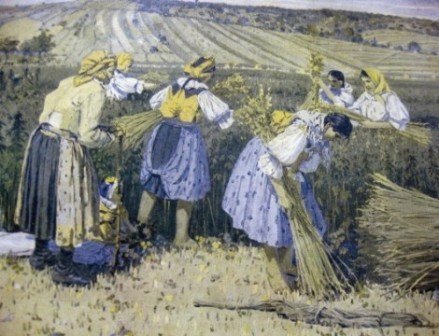
It occupied a primary place in Bohemia and Moravia in textile production, right next to flax and wool. It was cultivated mainly in South Bohemia and Moravia, where it had excellent growing conditions. Higher elevations were suitable for flax cultivation. Male plants were harvested a month earlier than female plants, which were left to mature. Male hemp stalks were placed in water for a week where sunlight was not allowed (therefore streams were planted with willows to cast shade). This was done primarily to facilitate the separation of woody matter from fiber. After a week, the hemp was washed and dried in the sun.
Female plants were also harvested in autumn. They were tied into sheaves and left to dry in the field. Then the plants were stripped of seeds using dense iron combs and the sheaves were placed in water (for more than 3 weeks). After the soaking process, drying followed again. Since autumn weather is not ideal, artificial drying was done in "pazdernas". A "pazderny" was a building with an oven, where poor people from the village were often housed. When hemp stalks were dried, the next stage came: breaking. Breaking separated the woody core from the fibers, and through several simple treatments, the final pure fiber ready for textile production was obtained.
That was about fibers, but what did people do with the obtained seeds? Some seeds were pressed for edible oil, some for lighting oil, some were stored for sowing the next year, and some were used as food. The waste (broken woody core) was not in vain. It was used for livestock bedding or building insulation. And the roots? Thanks to skilled charcoal makers, they were processed into charcoal.
Hemp Culture in Europe
Hemp broke through to Europe by two routes. From southern Russia through Lithuania to northern Germany, Sweden, Holland, and England. And then from Persia along the Caspian Sea coast through Tajikistan to Greece, Italy, southern France, and finally to central and western Europe.
The reign of Henry VIII brings the first major boom in hemp cultivation in England. During the reign of Henry's daughter Elizabeth (from 1558), interest in this plant increased dramatically. Subsequently, it also reached British colonies of the New World. In Germany, it reached its greatest glory in the 17th century.
Due to the popularity of its fibers, hemp became the main cultivated crop in European countries, especially in maritime powers.
Hemp in Africa
It was widely used as a ritual plant. It was meant to help overcome ethnic differences between nations. The riamba ritual is still performed in Congo today. Local indigenous people believe it will protect them from physical and mental harm. Throughout Africa, marijuana is smoked from a meter-long pipe to seal trade agreements.
The 1930s brought complete stagnation in hemp cultivation. Cotton began to be preferred, and then a hemp law was passed. The focus was on its intoxicating effects and hemp abuse.
Today, two types of hemp are recognized: technical and "ordinary". Technical hemp is cultivated for producing medicines, ointments, perfumes, insulation, as feed, and other uses. It has lost its important position and is subject to many restrictions due to fears of drug abuse.