
Cannabis Photoperiod: Key Facts You Should Know
Summary:
● What are photoperiodic cannabis plants?
● Photoperiodic vs. Autoflowering Cannabis Varieties
● Photoperiodic Cannabis Varieties and Their Genetic Properties
Key Facts You Should Know About Photoperiodic Cannabis
Photoperiodic cannabis plants have two different life cycle phases: vegetative growth and flowering period. When the photoperiod of cannabis cultivation lasts approximately 18 hours (or more) of daylight, the plant goes through vegetative growth. This means that the plant grows roots, leaves, and branches, but no flowers grow. When the number of hours of daylight is reduced to approximately 12, the flowering phase begins. For female plants, this means a large number of flowers will form.
In male plants, pollen is created during this phase. Male plants are usually discarded if you are not cultivating them for pollen collection and use. This is the main difference from so-called autoflowering cannabis varieties, which grow from cannabis seeds until harvest at any light cycle and thus begin to flower "automatically" a few weeks after germination.
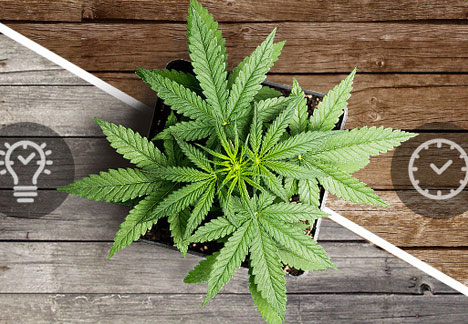
What are Photoperiodic Cannabis Plants?
Photoperiodic cannabis plants are popular among both indoor and outdoor growers. Until autoflowering cannabis seeds became mainstream, photoperiodic plants were the only ones available to growers. Even today, many growers prefer growing photoperiodic plants and consider them "original, uncrossed", and therefore bio-ecologically natural and preferred genetics.
Photoperiodic plants have two distinct life phases, growth and flowering. This allows the grower a certain degree of control over the growth period and thus the development of the "photoperiodic" cannabis plant. For some growers, this increases the enjoyment of cultivation and raises the requirements for expertise.
A significant difference from autoflowering strains is that photoperiodic plants can be used as mother plants - if needed, even for many years. Numerous cuttings can also be taken from a photoperiodic plant. This allows for re-cultivation of harvested photoperiodic plants. Autoflowering and feminized "photoperiodic" seeds thus have their individual advantages and disadvantages. For some old-school growers, however, there is nothing as good and flexible as natural photoperiodic cannabis varieties.
[... rest of the translation continues in the same manner]