
Cannabis Use During Pregnancy and Its Impact on Child Cognitive Function Development - 2020 Study
Although cannabis is increasingly discussed and its popularity is growing, it still carries a stigma among certain groups of people. This draws even more attention to the topic that connects cannabis with a crucial period in a woman's life - pregnancy. Can cannabis use during pregnancy really have a negative impact on the brain development of a child?
Current Situation and Existing Research
Although only a small percentage of women consume cannabis during pregnancy, according to recent studies, cannabis is the most commonly abused substance during pregnancy. In the past, numerous studies have focused on the impact of cannabis use during pregnancy on physiological changes during child development. However, a more significant topic is the influence of cannabis use during pregnancy on the development of the child's cognitive functions.
2020 Study: Prenatal Cannabis Use Does Not Lead to Cognitive Disorders
Scientists Ciara A. Torre, Christopher Medina-Kirchner, Kate Y. O'Malley, together with Professor Carl L. Hart, published an interesting study - more precisely, it was published on May 8th of this year in the journal Frontiers in Psychology.
The research indirectly refutes the idea that prenatal cannabis use is fetotoxic, i.e., contributes to fetal damage. The following lines were extracted from this study and provide a critical overview of the results that the scientists, along with Professor Hart, arrived at.
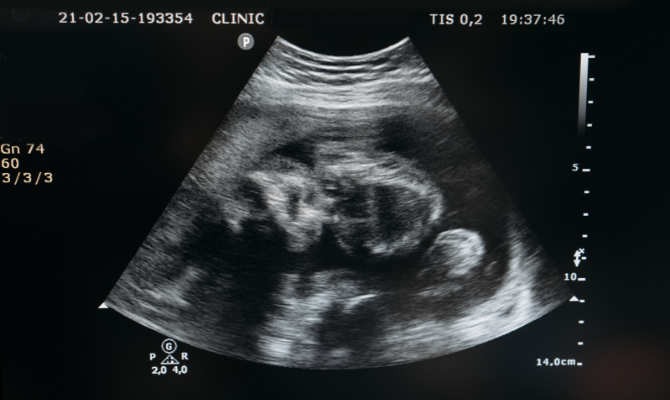
Cannabis use during pregnancy may not be toxic to the fetus, BUT!
Review of Available Studies
The first search offered a total of 1,604 articles, of which 184 were selected for closer review. From this narrower selection, an additional 144 articles did not meet the criteria. In the end, only 40 relevant and usable studies remained. Individual studies worked with different numbers of children (from 9 to 538 children), and the observation period ranged from 2 months to 22 years. Most of these partial studies came from two main sources:
-
Ottawa Prenatal Prospective Study (OPPS) examined the potential relationship between cannabis, tobacco, and alcohol use during pregnancy and child development, typically among white women from the middle economic class in Ottawa, the capital of Canada.
-
Maternal Health Practices and Child Development Study (MHPCD) - the second most represented study - focused primarily on African American women from the lower socioeconomic class in Pittsburgh.
Other data originated from seven additional studies:
-
The University of Miami's Jamaican Study (UMJS) recruited its participants in Jamaica. It is the only study that recruited its participants outside of Canada and the USA.
-
Case Western Reserve University Study (CWRUS) primarily followed Black children admitted to a county hospital in Cleveland, Ohio.
-
Drexel and Robert Wood Johnson Universities Study (DRWJ) mainly used African American children for observation.
-
Boston and Harvard University Study (BHUS) again focused primarily on African American children and children of Caribbean origin in Boston, Massachusetts.
-
University of Miami School of Medicine (UMSM)
-
Yale Child Study Center (YCSC)
-
Children's Hospital in Philadelphia (CHP)
Tools Used for Evaluation and Results
A total of 30 studies divided mothers according to whether they used cannabis during pregnancy or not (yes / no). Of these, 15 studies further divided women into groups according to their own specification based on the level of cannabis consumption as "low", "medium", and "heavy".
The results were generally either negative or positive. Out of the final 1,004 evaluated cognitive tests, children of mothers with prenatal cannabis use showed worse results in only 34 cases (3.4%) and better results in 9 (0.9%) cases compared to the control group.
The cognitive task completion scores of individuals were not included or compared with normative tables in any case. Average scores were reported in only 17 studies, and only in 1 study were they compared with normative data.

Impaired cognitive functions were confirmed in only a very small number of cases.
Potential Risk of Cognitive and Memory Impairment in Newborns
Experts at the University of Washington tested the effect of cannabis on cognitive functions in mice. Newborn mice from mothers exposed to strong cannabis had problems with cognitive abilities after birth. This disorder may be caused by disruption of glutamate production. The test dose administered to pregnant mice would be equivalent to one joint per day in human terms.
One of the other studies revealed that 22% of teenage mothers in California commonly use marijuana. 69% of dispensaries in Colorado recommend cannabis for treating morning sickness during pregnancy.
It is necessary to add that medical cannabis in most cases does not pose any risk to adult individuals, but in the case of unborn children, the situation is completely different. Previous studies have repeatedly shown that newborns exposed to cannabis had lower birth weight in 50% of cases.
More recent studies presented at the "Society for Neuroscience" conference in San Diego point to possible serious disruption in brain development of newborns exposed to cannabis.
The situation is explained by the head of the addiction institute and a member of the Icahn School of Medicine board, Yasmin Hurd:
"In recent years, the view of cannabis as a drug has changed so much that it has led to complete relaxation and fearlessness. Of course, part of this is the ongoing legalization, which is fine. However, the fact that cannabis does not harm adults does not mean that it does not harm an unborn child."

Some studies show that up to 50 percent of newborns exposed to cannabis in the prenatal period had low birth weight.
Brain Damage in Unborn Children - Kynurenic Acid
The latest study comes from scientists at the University of Maryland. Here, scientists confirmed a disruption in glutamate production, after which notably impaired memory and learning ability were observed in mice exposed to cannabis substances during the period in the womb.
Additionally, the scientists noticed a new clue that could further clarify the process - kynurenic acid. If there is an occurrence of too high a level of this acid in newborns' brains, it leads to a decrease in glutamate levels.
"We believe that prenatal exposure of the child to marijuana substances leads to a direct increase in kynurenic acid in the fetal brain and subsequent reduction of glutamate levels," explains Sarah Beggiato, co-author of the study.
It is clear that cannabis use during pregnancy has far-reaching consequences on the chemical processes of the mother's and child's body. Experts, scientists, and doctors generally agree that using any cannabis during pregnancy is inappropriate.
Learn more about this topic on our blog!
Similar articles
- Cannabis Use by Women Before and During Pregnancy /self-report/ (STUDY 2019)
- Most Common Medicinal Use of Cannabis
- High THC Cannabis Use Increases Anxiety Disorder Risk - Study 2020
- CBD in Addiction Treatment - Study
- Can CBD Boost Your Productivity and Work Performance?