
CBD vs THC - Why Does CBD Not Cause Psychoactive States?
- CBD and THC are essentially chemical siblings - but their effect on our endocannabinoid system is different.
- CBD has the ability to balance the psychoactive effect of THC
- Both substances can act independently, but the best effect is achieved through simultaneous action
THC acts psychoactively and thus induces "marijuana states", while CBD does not affect a person's psyche at all. But how is it possible that one cannabinoid affects the psyche so markedly, while its chemical sibling seemingly does not?
CBD does not act psychoactively?
The entire issue revolves around the so-called endocannabinoid system (more in the article "Introduction to the Endocannabinoid System"). When we talk about the psychoactive effects of medicinal cannabis, we are talking about the activation of CB1 cannabinoid receptors, which are concentrated in the central nervous system and brain. The main difference between CBD and THC lies in how each of them acts on this CB1 receptor - THC binds to it very well, while the binding affinity of CBD to CB1 receptors is very low. This is where the effects of these two substances diverge.
We can simply imagine this process as plugging an adapter into an electrical outlet. The THC molecule is perfectly shaped to be able to connect to CB1 receptors. Once connected, THC stimulates and activates these receptors - which is why scientists call THC a "CB1 receptor agonist".
The THC molecule directly imitates a human neurotransmitter called anandamide, also known as the "happiness molecule". Through animal experiments, it has been shown that this molecule activates CB1 receptors, just like THC - which are then responsible for our sense of well-being and increased appetite. You can also naturally release this endocannabinoid through sufficiently intense exercise or running - more information can be found in our previous article "Cannabis and Sports, or a Runner's Intoxication".
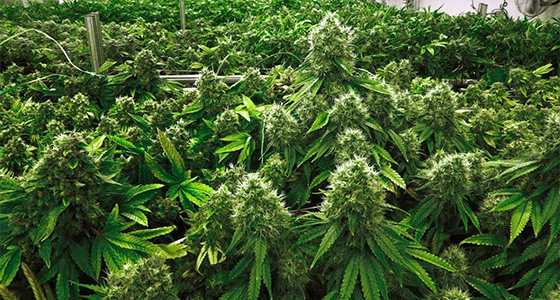
Effects and Impact of CBD
Unlike THC, CBD does not fit so nicely into the same receptors. It is even categorized as a CB1 receptor antagonist. This means that CBD does not act directly on the CB1 receptor - either as an activator or as a suppressor - but rather reduces the ability of cannabinoids like THC to activate this receptor.
We can imagine this like a tetris game - the CB1 receptor has a space for a triangular shape - the THC molecule. If a round shape - CBD - fits into this triangular section instead of THC, the remaining THC molecules bounce off because they simply won't fit.
Project CBD co-founder Martin Lee describes the entire process as follows: "CBD opposes the THC molecule directly in the CB1 receptor - resulting in suppression of the THC effect."
Different Effects of THC & CBD
So what are the differences in the effects of THC and CBD in real life?
Let's say you are vaporizing medical cannabis flowers with a prescription that contain 24% THC. If these flowers contain 0.2% CBD, THC will act almost 100% and will be able to activate CB1 receptors without CBD limiting it. Psychologically, you will likely feel extremely "high", and in some individuals, this can also lead to increased paranoid feelings and thoughts.
However, if you vaporize medical cannabis flowers with a composition of 24% THC 6% CBD, you will still feel a very strong psychoactive effect of THC, but its negative effects such as paranoia or tension should be sufficiently suppressed with the help of CBD.
The difference between the psychoactivity of THC and CBD molecules has also had deep political implications. For example, Project CBD founders describe how some legislators mistakenly put THC in the "bad molecule" drawer and CBD in the "good molecule" drawer. In many states, including ours, CBD has been legalized, while its psychoactive sibling THC remains illegal.
One of the main pioneers in medicinal cannabis science, Raphael Mechoulam, often mentions the so-called cannabinoid chain effect or "entourage effect". By the chain effect, Mechoulam means the ability of cannabinoids to work better together, in a complete, natural form, rather than in isolation.
However, the progress of science dealing with the therapeutic effects of "marijuana" is advancing every day, and once scientists understand all the mechanisms of action of CBD, THC, and other cannabinoids and their interactions, we can expect precisely tailored treatment for disorders such as multiple sclerosis, Alzheimer's disease, sickle cell anemia, epilepsy, and many other conditions.
Author: Bruce Barcott
Translation: Filip Maral
Sources: researchgate umich.edu journals.sagepub leafly.com
Images: newswo foxnews hempoilbenefits
Similar Articles
- Epilepsy
- Therapeutic Cannabinoids 1: CBD and THCV
- Sickle Cell Anemia and Cannabis
- Therapeutic CBD News from Dinafem
- Two-Year-Old Girl Saved by Medical Cannabis