
Crystal Drugs? No! Only pure THC and CBD...
- THC and CBD can now be obtained in isolated, crystalline form thanks to modern technologies
- Crystalline cannabinoids are currently very expensive, mainly due to the complex production process
- THC and CBD in crystalline form provide a few key advantages
Purity and potency are the main driving force of sales in today's market full of top-tier cannabis concentrates. Chemists and engineers developing new and better types of cannabis extracts are continuously pushing the quality bar higher and higher.
Is it even possible to further improve the quality of today's tinctures and marijuana extracts?
One of the questions that more demanding customers interested in cannabis products bring up is: "Can individual cannabis cannabinoids be isolated and prepared separately?" As you might guess - yes, they can.
Chemists and extraction specialists are now able to prepare a crystalline isolate consisting of THCA and CBDA. Products of this type are called "crystalline" in English.
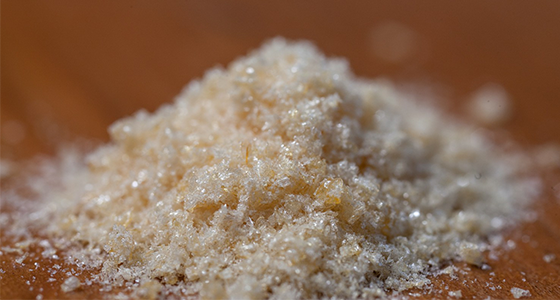
Cannabis Substances THCA and CBDA in Crystal?
Tetrahydrocannabinolic acid (THCA) and cannabidiolic acid are the two most prominent cannabinoids found in the resin produced by medicinal cannabis flowers. Both THCA and CBDA are precursors to the more commonly used THC and CBD. During the final aging stage of cannabis flowers, cannabinoid precursors undergo decarboxylation and are transformed into psychoactive substances.
"The cherry on top are nowadays various methods of heating cannabis flowers, during which final decarboxylation and activation of active substances occurs."
Medicinal cannabis contains literally hundreds of different active and inactive substances. These substances are equally diverse in their structure when viewed under a microscope. THCA and CBDA are suspiciously similar, and their molecular, crystalline structure is characterized by solid and lattice forms. When isolated, THCA and CBDA look roughly like snowflakes or crushed salt.
Isolated THCA and CBDA are by far the purest available form of cannabis concentrates with potency reaching up to dizzying 99.9%. However, this also means that no traces of plant terpenes, flavonoids, fats, lipids, or any other substances typical of plant bodies can be found in the final product.
The complete, very detailed, and specific process of producing cannabis crystalline is currently a manufacturing secret. However, certain information has already leaked through the veil of mystery.
How is Cannabis Concentrate in Crystal Produced?
The entire process begins with selecting a specific cannabinoid extract in concentrate form. The original form of extracts, in addition to THCA and CBDA acids, also contains extracted remnants of plant terpenes, flavonoids, and so on. To achieve a pure form of THCA with CBDA, a series of "washing" separations must first be performed.
The first washing is done using popular hydrocarbon hexane along with acetic acid (something like extra-strong vinegar). Once these substances are mixed with the extract, plant impurities and unwanted particles are separated. To ensure proper separation, the entire mixture must be stirred in a special rotary evaporator, called "rotovap" in English. Rotovaps are designed to be able to gently separate solvents from desired substances using rapid rotation, heat introduction, and pressure.
Once the first step is complete, it's time for the remaining cannabinoids to undergo a process called "preparative chromatography." In short - during chromatography, the desired substances are filtered by sending them through various types of other substances at different speeds. Due to the influence of other substances, the first rotovap washing step must be repeated.
"Both THCA and CBDA have therapeutically positive effects despite not exhibiting any of the psychoactive properties of classic THC."
The final phase is the preparation of the product for final consumption. During this process, it is necessary to remove the remaining small residual particles from the cannabinoids. Using methane and pentane, final separation occurs, which must again be done in several steps. Each separating substance must first be added and then separated again using the rotovap.
Once the entire separation method is successfully completed, all that remains are crystalline cannabinoids with 99% purity.
How to Use Crystalline THCA and CBDA?
To achieve a psychoactive effect using pure, crystalline THCA, the substances must first be heated. However, what's very interesting is that cannabinoid crystalline can be used for its therapeutic effects even in raw form and moreover using many types of methods.
Crystalline cannabinoids are easily digestible for the body and can be added to foods or measured into individual capsules and pills. Dosing is also simpler in this case due to the absolutely pure crystalline form.
Users who want to rapidly activate their crystalline cannabinoids to achieve a psychoactive effect often choose the dabbing method or use of a vaporizer. By quickly heating and inhaling THCA, an instant conversion to active THC occurs. CBDA can be similarly activated by rapid heating, though it does not produce the same intoxicating effect. Therapeutic effects are achieved in both cases, and CBDA can even help prevent sometimes unwanted effects of high THC doses.
Crystalline THCA and CBDA are tasteless and odorless, which eventually became uninteresting for customers. Now, crystalline cannabis products enriched with optional terpene notes also exist. By correctly combining cannabinoids with terpenes, a slightly different effect can be achieved, as terpenes directly influence the effects of certain cannabinoids.
As you can see, crystalline cannabis is capable of providing a number of advantages that classic extracts simply cannot match. The only disadvantage is the complex production process, which is currently in the hands of very few producers. Consequently, cannabinoids in crystalline form are very expensive and not available in every market.
If you have tried or will try crystalline cannabinoids, don't forget to share with us on social media!