
Hemp and its Plant Textile Culture: Information You Don't Know Yet
Have you heard of plant tissue culture? How does it work and how is it different from cloning? We'll tell you today. At the end, you can learn how to set up a plant tissue culture at home.
Tissue Culture vs. Plant Cloning
Tissue culture involves removing living tissue for further cultivation. This cultivation takes place in sterile conditions, resulting in new and specific plant cultivars. A major advantage of this technique is preserving rare hemp varieties that would otherwise become extinct.
You can simply imagine tissue culture as "genetic banks" that preserve a part of the plant under special conditions, which must later establish in soil. Tissue culture is very similar to cloning, except that the hemp cutting is sterilized and soaked in a solution containing other nutrients. This is usually not done during cloning.
How Hemp Tissue Culture Works
Plant tissue culture is full of hormones and nutrients that help plant development. So if you want to help hemp with growth, root development, it's up to you to provide the plant with a specific culture. The tissue can be cut and cloned after maturation.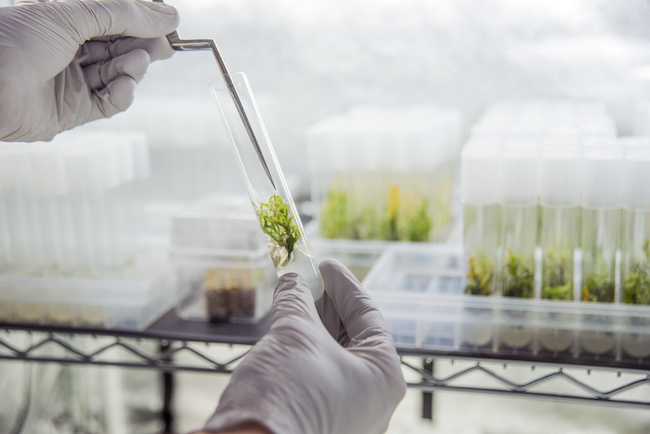
Hemp Tissue Cultivation
What Forms the Basis of Hemp Tissue Culture?
Before starting with tissue culture, it's good to verify you're doing it correctly. Only then will you know what to avoid in the future. The most important basis is finding a hemp plant on which to perform tissue culture. This plant cannot be affected by any diseases or pests. Equally important is clean air during cultivation. Lastly, mention the medium in which the plant will be placed. It should be a substance with a gel-like texture that helps root development.
What to Do When We Want to Plant Tissue Culture at Home?
Tissue culture doesn't have to take place only in laboratories. If you're interested in starting plant cultivation at home and want to try it, we now offer a simple guide on how to do it. Prepare yourself that you'll need several specific tools and items:
1.) Prepare a warm environment, as you'll be working with flame: turn on the laminar flow hood for at least 30 minutes. An alternative could be a stove or alcohol lamp.
2.) Sterilize the cover with 70% ethanol, but be careful not to spray directly on the filter.
3.) Turn on the sterilizer and let it heat up properly.
4.) Now sterilize the paper bag in a dry cycle, then sterilize the containers.
5.) Previous steps refer to media preparation. Obtain a container and pour osmosis and distilled water. To know the correct ratio, add about 900 ml of water per 1l of media. Then add: nutrients, 30 grams of sugar, 6 grams of agar. Pour all mixtures into a bottle and leave on the sterilizer for about 15 minutes.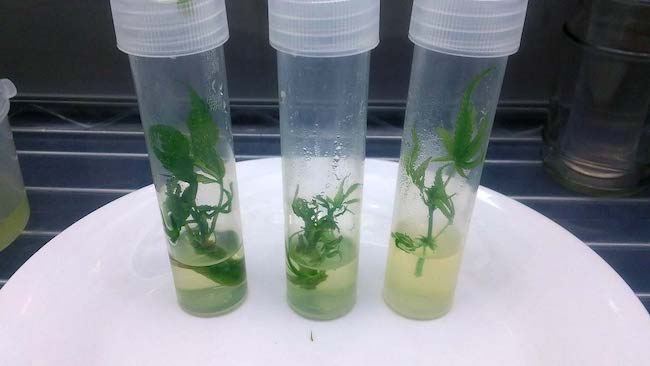
Hemp Tissue Culture in Vials
6.) Prepare a solution: 0.5% bleach and 0.1% sterile tween.
7.) Fill the previously selected container with minimal water. Then place hemp in this container.
8.) Prepare a sterilized container with a good seal. Fill it with an 80% bleach solution.
9.) The container must be shaken to "settle the components" well. Dedicate at least 20 minutes to this.
10.) When you finish shaking, place hemp in a different container filled 80% with sterilized water. Shake again, but more gently and briefly.
11.) Take sterile tweezers. Transfer the hemp to paper that perfectly absorbs excess water. Finally, place hemp in the container and leave it there for 3 weeks. The temperature at which the container with hemp should be stored is 2°C. Maintain a light cycle of 18/6.
Conclusion: After approximately 3 weeks, the clone is ready to be planted in your chosen environment. Either indoor or outdoor.
At first, this procedure might have seemed frightening. In reality, tissue culture is simpler than it seems. The only thing you must follow 100% are conditions and safety measures. This is a new technique not yet well-known among growers. If you regularly read our blog, you'll learn not only about various cultivation techniques but also problems, news, and tips.
Similar Articles
- Solutions to Hemp Germination Problems
- Sinsemilla: Origin, Definition, and Use of This Hemp
- Find Out the Yields of Autoflower Hemp
- Hemp Seeds: New F1 Hybrid Seeds