
Hemp Coconut Oil - Recipe, Effects, and Benefits
- Coconut oil itself offers a range of benefits and healing effects
- When enriched with prescription medical hemp, its healing effect increases
What do the numerous hemp body care products have in common with medical hemp cocoa and THC oil spray? Besides being some of the most sought-after hemp products in the entire industry, they share one crucial ingredient – coconut oil.
Why coconut oil?
Coconut oil has already managed to integrate itself into almost the entire hemp industry and most of the most desired products, including hemp edibles and ointments. But why is it such a popular choice?
First of all, coconut oil is one of the ingredients with the absolute highest content of saturated fatty acids. This means that when combined with hemp, all healing cannabinoids are bound seamlessly and without loss. In comparison to olive oil, which contains around 20% saturated fatty acids, coconut oil contains up to 80% – therefore its ability to bind cannabinoids is much, much higher, which is reflected in the final healing effectiveness. Coconut oil is thus an almost perfect medium for medical hemp.
Moreover, coconut oil contains a number of other beneficial acids for the human body. A great example is lauric acid, which transforms into monoglycerides in our digestive tract and ultimately acts antimicrobially. Coconut oil contains a whole range of other beneficial substances, making it a strong competitor to more classic bases like butter or rapeseed oil.
Cannabinoid extraction using coconut oil
Another of the many advantages of using coconut oil stands out during cannabinoid extraction – the resulting product remains solid at room temperature. The versatility of hemp coconut oil and its ability to remain intact at room temperature is also a huge advantage in the production of medicinal ointments. Furthermore, the solid state of coconut oil is suitable for producing gelatin medical capsules, through which we can easily introduce the desired amount of healing cannabinoids into the body. The production of such capsules is very simple, and almost all ingredients, including prescription medical hemp (which will be problematic in the current situation), can be obtained in pharmacies or online.
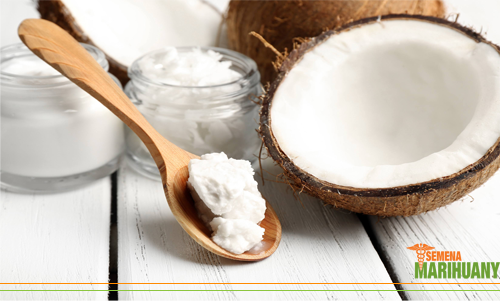
How to make hemp coconut oil
One of the most frequently overlooked uses of coconut oil is its implementation in the production of edibles enriched with healing cannabinoids. Besides being able to find coconut oil practically anywhere at a relatively low price, it is also extremely easy to perform the decarboxylation process and incorporate the desired amount of hemp phytocannabinoids.
For those without experience with hemp edibles, it's good to mention a few differences compared to classic inhalation:
- The resulting effect lasts much longer, starts gradually, and affects the physical body more compared to inhalation
- The resulting metabolic effect is very different, as cannabis comes into direct contact with your digestive tract
- For some patients with developed tolerance, digestive tract application is much more advantageous
Hemp Coconut Oil Recipe
Ingredients
- 28 grams of dried hemp flower
- 500 ml coconut oil (or oil of your choice, e.g., olive oil)
Tools
- Strainer
- Grinder (Mill, mixer, food processor, etc.)
- Double boiler, milk cooker, pot, etc.
Procedure
1. Grind all the hemp you want to use finely. You can use the whole plant, flowers, leaves, or a mix at your discretion. Stems naturally have only trace amounts of the substances we want. When using the complete plant, you'll also get healthy fiber, which certainly isn't a bad thing, and some experienced hemp chefs reportedly swear by this method. Remember, however, that the more cannabinoid-poor material you use, the more the hemp taste will be noticeable in the final product, while potency remains almost the same.
2. Mix your chosen oil with the ground hemp and place in a double boiler. Carefully heat the mixture, preferably for several hours. Slow heating allows us to bind and activate as many active ingredients as possible without burning any. Heat the mixture for at least 6 hours, stirring occasionally. If you want to be really thorough, you can heat and stir the mixture for several days.
3. Strain the activated oil and remove all hemp particles. Pour the oil into your chosen container and store. The shelf life of such a product will be at least 2 months. You can significantly extend the shelf life by storing it in the refrigerator.
Coconut oil and its use for products enriched with healing cannabinoids will certainly be heard a lot in the hemp market of the future. Until such products reach the market and us, you can experiment with your own ingredients and prescription medical hemp.
*All recommendations and recipes in this article are purely indicative. Always exercise your own judgment and adhere to the legislation in your country.
Images: coconut huffingtonpost