
HHC and Treatment
Perhaps you haven't heard about HHC yet. One of the reasons is that it is a less common cannabinoid in hemp, and thus fewer studies focus on it. In today's article, we'll introduce it, explore its effects, and discuss the known facts.
What is the HHC cannabinoid?
Although HHC as a cannabinoid has been known since 1944, it's not widely discussed. It is a hexahydrocannabinoid that was not created by chance, but through the work of chemist Roger Adams in America. How? Adams, as an expert in the laboratory, once decided to add hydrogen molecules to delta-9 THC. A hydrogenation process occurred, transforming THC into HHC. The initial HHC result came from the psychotropic cannabis substance THC. Today, HHC is mostly obtained from legal CBD, which is extracted from hemp.
HHC vs. THC - What's the Difference?
Although HHC originated from THC, how do these two cannabinoids differ? The fundamental difference is the hydrogen molecule. Only HHC contains it, without which it could not exist. From a chemical perspective, HHC is also somewhat weaker than THC. This means it does not trigger psychoactive effects to the same extent as delta-9 THC.
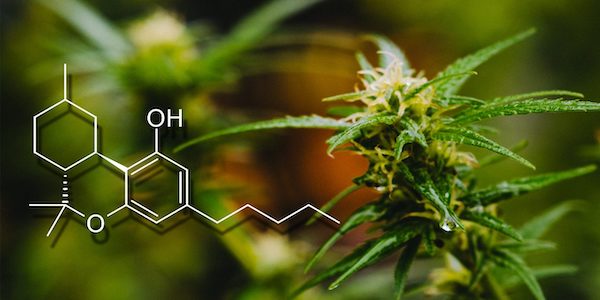
Chemical Compound of HHC Cannabinoid
Each cannabinoid contains different ratios of particles and molecules. Generally, more than half of the active molecules must be present to fulfill their effects. Therefore, we can say that HHC and THC cannabinoids have similar effects on the body. The HHC dose must be at least as large to match the effect of THC. This is one reason why the HHC cannabinoid is legal in most states, but still controlled by law, as it exists in a so-called gray federal zone.What Effects Does HHC Cause?
Again, it depends on the individual's response to the effects this cannabinoid can provide. Most commonly, feelings of excitement and sudden energy are reported, closely associated with muscle and joint pain relief.
The effects themselves result from two types of molecules found in HHC. The first is 9R HHC, which can naturally bind to endocannabinoid receptors, and the second is 9S HHC, which has a different structure and binds to receptors more difficultly. Therefore, it is challenging to specify exact effects expected from the HHC cannabinoid. Based on our knowledge that HHC binds to brain CB1 receptors, we can assume its effects will be:
- Anti-inflammatory
- Sleep support
- Calming
- Pain reduction
- Anxiety elimination

Further research on HHC cannabinoid is necessary
Since HHC is not yet as extensively studied as other cannabinoids, experts in their claims also warn about potential negative side effects, such as dizziness, risks of mental disorders, higher injury risks, and others.Is HHC Treatment Possible?
Since scientific studies are contradictory in HHC's effects, legalization, and impact, it is impossible to draw precise conclusions about whether HHC could be used to treat specific diseases. Even Google cannot provide more information. More research is simply needed. Currently, the cannabis market is trying to promote HHC in society, producing HHC tinctures, HHC gels, and dried HHC flowers. However, some assumptions exist about potential future HHC treatments:
HHC occurs naturally in cannabis: Although in smaller quantities, extracting the cannabinoid naturally from cannabis could bring benefits
HHC is a hydrogenated form of THC: HHC is derived from THC
HHC has similar effects to THC: Medicinal cannabis with higher THC content has been used for centuries to treat mental and physical conditions, so it is likely that the HHC cannabinoid with a similar structure could also serve as a treatment.
If sufficient space is given to examine the HHC cannabinoid, it is more than certain that it has high potential. For now, we must be content with the available information.