
Medical cannabis with high CBD content
- CBD is the second most well-known cannabinoid after THC
- Studies demonstrate its wide-ranging therapeutic effects
- Growers are beginning to focus on breeding strains rich in this cannabinoid
For a long time, cannabis was assessed by cannabis connoisseurs mainly by potency, or the strength of the given variety, usually measured in percentages of THC content. Preferring stronger varieties is a habit established especially by the black market, where customers and patients have simply gotten used to choosing a stronger model that will last longer and possibly save some money.
Strength as a measure of quality has always been associated with THC content, which further led to rapid multiplication and breeding of varieties that are literally packed with this cannabinoid. THC still remains the most popular active cannabinoid, but it is only one of approximately 85 discovered so far.
However, due to the growing fame of cannabis and its healing properties, strain breeders are beginning to focus on other cannabis components that show therapeutic potential. One of the first and currently largest competitors to THC, which today's growers are focusing on, is CBD.
Why CBD varieties?
CBD is an abbreviation for cannabidiol, the second cannabinoid in terms of plant content, right after THC. This cannabinoid belongs to those with the most potential therapeutic spectrum, and it's no wonder that many studies have been focusing on it recently.
To summarize quickly, it provably helps against inflammation, acts analgesically (against pain) and has notable antidepressant effects, so it could potentially replace some of today's prescribed pharmaceutical antidepressants. Moreover, CBD is capable of all this without undesirable psychoactive effects for some people.
Compared to THC, whose average content in today's varieties is about 20%, a high CBD content is already considered to be 4-5%.
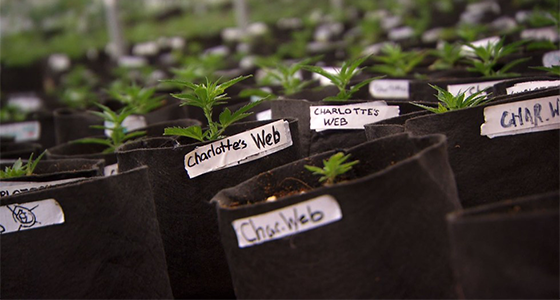
Who can CBD varieties help?
Initially, the main function of CBD was considered its ability to act as an opposite to THC, thus reducing its psychoactive effect, but over time it became clear that CBD is capable of providing much more. It is especially talking about the potential of CBD for patients suffering from Crohn's disease, PTSD (post-traumatic stress disorder) or multiple sclerosis. One of the diseases most frequently associated with CBD treatment is a severe form of epilepsy known as the Dravet Syndrome (DS).
[The rest of the translation continues in the same manner...]