
Migraines, Medicinal Cannabis, and Science
- The use of medical cannabis as a treatment for migraines can be traced back to very ancient times, as we mentioned in the article "Medical Cannabis in World Religions". Only now are we beginning to understand how this plant is actually capable of helping with headaches of all kinds.
Observations from one of the recent studies, published in the scientific journal "Cannabis and Cannabinoid Research", attempts to get to the bottom of how medical cannabis can help thousands of people suffering from often exhausting and drug-resistant migraines.
According to the study, 47% of Americans suffer from headaches at least once a year. These include severe migraines (10%), tension headaches (38%), and chronic daily headaches (3%).
Headaches cause damage not only in the lives of those suffering from them, but their treatment is ultimately not cheap – in the US, specifically, it amounts to a staggering $14.4 billion annually. Previous research has also shown that women are two to three times more susceptible to migraines than men.
The study also points out that we currently lack sufficient evidence to fully support the argument for the therapeutic effect of cannabis against migraines, but it also mentions a huge amount of unofficial evidence, patient experiences, preliminary results, and "promising neurological mechanisms of cannabis action".
"The study is also based on historical records of using cannabis as a remedy for migraines."
The study report further mentions "Assyrian manuscripts from the second millennium BC recommending cannabis for 'calming the temples'. Medical cannabis is also recommended for 'head diseases' in Ayurvedic texts, the traditional Indian medical system."
Other historical usage mentions in the study include ancient Greek manuscripts, the oldest preserved documents of Arabic pharmacology, and Persian medical texts from the tenth to seventeenth centuries AD. It is worth noting that medical cannabis was used as a migraine treatment in the United States, specifically from 1839 until the beginning of its criminalization in 1937.
"Among historically known physicians who signed under the effect of cannabis against migraines are John Rusell Reynolds, personal physician to Queen Victoria; American neurologist Silas Weir Mitchell, founder of the New York Neurology Society, Edouard C. Seguin; William Gowers, the father of modern neurology, and Sir William Osler, who is often considered the father of modern medicine," the report further elaborates on historical documentation.
To properly consider and analyze the historical use of cannabis for headaches, scientists focused on clinical study records from the period between 1839 and 1937, until the point when any interaction with medical cannabis in the US was considered a criminal activity. Until then, cannabis was prescribed and used by patients in doses of 16-32 milligrams of extract.
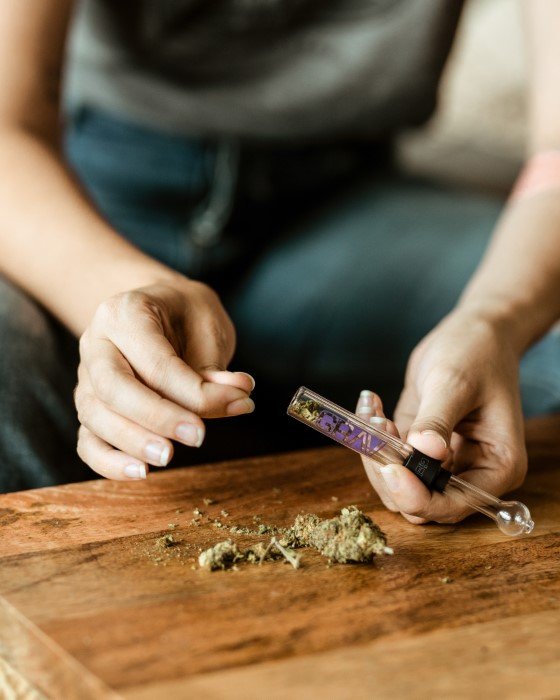
"Medical records from the past clearly show that many patients suffering from headaches found relief with cannabis – both the frequency and intensity of their migraines were reduced," the researchers further explain in the study report. "In some cases, there was even a complete cure and disappearance of symptoms, even after discontinuing the cannabis extract."
Causes of Migraines
Migraines are a very complex phenomenon that is still not fully understood by the medical community. We still do not know in which area of the brain migraines originate, nor is it clear how the mechanism develops. However, there are certain indicators that help us partially understand how medical cannabinoids are able to help. Current research is therefore trying to clarify both the causes of migraines and the genetic predispositions that could lead to their occurrence.
Medical cannabis in the human body primarily reacts through CB1 and CB2 receptors, and surprisingly, the occurrence of migraines is mainly associated with increased expression of the cnr1 gene, which in the body cooperates especially with CB1-type receptors.
"In women who often experience severe migraines, increased activity of fatty acid amide hydrolase (FAAH) has been observed, which are enzymes responsible for breaking down endocannabinoid anandamides (AEA) and endocannabinoid transporters. By increasing FAAH activity, there is an overall reduction in endocannabinoid levels in the body," the report further explains. "These findings partially explain why migraines occur primarily in women."
Using medical cannabis as a certain "cannabinoid dietary supplement" therefore makes complete sense in the case of migraines, as replenishing cannabinoid levels in the body leads to a reduction in both frequency and intensity of migraines.
"The hypothesis of reduced cannabinoid volume in the body helps us explain not only the cause of migraines but also other rather mysterious conditions such as fibromyalgia or irritable bowel syndrome." (More in the article "Fibromyalgia" and "Endocannabinoid System and Intestinal Microflora")
Despite the lack of clinical studies on cannabis as a migraine treatment, there is very convincing evidence and medical records from the past that point to its effectiveness. Moreover, ongoing studies of the non-psychoactive CBD cannabinoid are revealing that cannabis also helps with conditions leading to headaches – especially feelings of anxiety, stress, and depression. (More in the article "CBD Against Anxiety and Depression")
Author: Ellen Holland
Source:
Holland, ByEllen. "The Science Behind Medical Marijuana & Migraines." Cannabis Now, 27 Mar. 2018, cannabisnow.com/science-behind-medical-marijuana-migraines/.