
Mysterious Terpenes in Cannabis: Phellandrene and Myrcene
- There are hundreds of terpenes, substances that lend plants their specific fragrance, protection against insects, and a range of diverse effects on the human body.
- However, in commonly available cannabis strains, we won't find more than 30 in a relatively observable quantity.
This list of terpenes is further divided into primary terpenes (limonene, pinene, humulene, ocimene, myrcene, linalool, caryophyllene, myrcene, and terpinolene) and about 20 secondary terpenes, which are often pushed to the background and do not attract much scientific interest.
Phellandrene is one such "outcast" among terpenes.
What do we know about phellandrene?
From a chemical perspective, phellandrene consists of two basic organic compounds – alpha-phellandrene and beta-phellandrene. Both of these substances can commonly be observed in eucalyptus plants.
Phellandrene is characterized by a menthol, woody, and subtly citrusy aroma. Phellandrene is relatively well absorbed and is a common component of many cosmetic products.
This terpene is also a long-standing part of Eastern holistic medicine, where it is used for its antibacterial and antifungal properties.
Let's look at what contemporary researchers think about the mysterious phellandrene and in which cannabis models this terpene can be found.
Cannabis Strains Rich in Phellandrene
Despite being largely shrouded in mystery, the worldwide progress of cannabis legalization has allowed for at least a slightly deeper understanding.
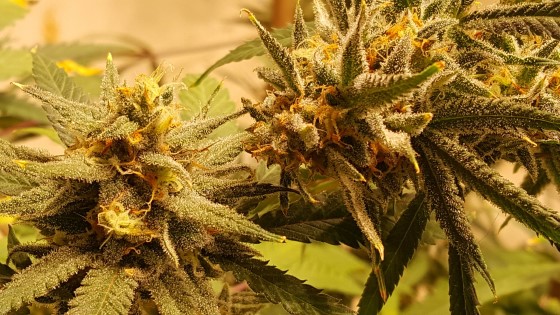
A 2017 study attempting to determine in which cannabis models phellandrene is found discovered that it can most often be observed as a component of flowers in Jack Herer and the Trainwreck strains.
The study examined a total of 233 samples from 30 different cultivars obtained from one of California's legal cannabis dispensaries.
Phellandrene was also classified as a secondary characteristic of cannabis strains containing high amounts of the terpene terpinolene.
.jpg)
Unique Terpene Profile of Phellandrene
Although phellandrene is most frequently found in eucalyptus, it can also be found as a component of essential oils in:
- Mint
- Black pepper
- Cinnamon
- Pine
- Lavender
Therapeutic Properties of Phellandrene
A 2015 study tested the effects of phellandrene on mouse subjects.
Alongside phellandrene, researchers also tested the effects of limonene, for which they observed antihyperalgesic and antidepressant effects.
You might be interested in: "Lemon Cannabis Strains with High Limonene Terpene Content"
However, it is still necessary to determine whether phellandrene possesses the same effects in isolation.
In one in vitro study, promising effects of phellandrene were observed in treating cancer cells and certain anti-inflammatory properties.
These remain preliminary results that serve researchers only as a guideline.
You might be interested in: "(STUDY) - Anti-Inflammatory Effects of Terpenoids from Cannabis"
Myrcene
Myrcene is one of the most frequently occurring terpenes in cannabis.
Besides cannabis, myrcene is found in hops. In fact, myrcene lends beer its spicy balmy aroma.
It is also found in lemongrass, which has been part of traditional medicine for centuries.
How Frequently Does Myrcene Occur in Cannabis?
In modern cannabis models, myrcene is found very frequently. Just look at the Leafly Labs laboratory survey, where thousands of flowers from various cannabis models were carefully analyzed.
Myrcene forms an average of 20% of the total terpene content found in flowers of modern cannabis models.
Myrcene is also the most common dominant terpene in the cannabis flower.
This means that if you were to receive, say, 1 gram of cannabis from a random offering, you have about a 40% chance that it will contain a dominant level of myrcene.
These percentages clearly point to the fact that modern marijuana strains fundamentally suffer from a limited terpene spectrum offering.
Professional cannabis breeders and world-renowned and newly emerging seed banks still have plenty of room for innovation.
The chemical structure and substance content in cannabis can still be extensively branched, and the world will thus see many new strains in the future, many of which will be specifically "tuned" to treat certain health problems.
Author: Patrick Bennet
Source: Bennett, Patrick. "The Mysterious Cannabis Terpene Phellandrene." Leafly, 29 Apr. 2019, www.leafly.com/news/science-tech/mysterious-cannabis-terpene-phellandrene.
Similar Articles
- Kratom and Cannabis (How Often to Use, Contraindications & Effects)
- (STUDY) - Anti-Inflammatory Effects of Terpenoids from Cannabis