
Septoria Leaf Spot vs. Calcium Deficiency in Cannabis Plants: How Do They Differ?
When growing cannabis, many things can happen, and these problems usually manifest on the leaves. Two common issues that growers encounter and must learn to distinguish are leaf septoria and calcium deficiency. It is therefore important to regularly inspect the plants to detect any symptoms appearing on cannabis leaves that could be signs of nutrient deficiency or infection. Recognizing disease or nutrient deficiency symptoms will allow you to take immediate corrective actions.
Given that many symptoms of leaf septoria and calcium deficiency are similar, it is crucial to recognize and differentiate them. In this article, we will focus on the differences between leaf septoria and calcium deficiency in cannabis plants and potential solutions.
What is Leaf Septoria?
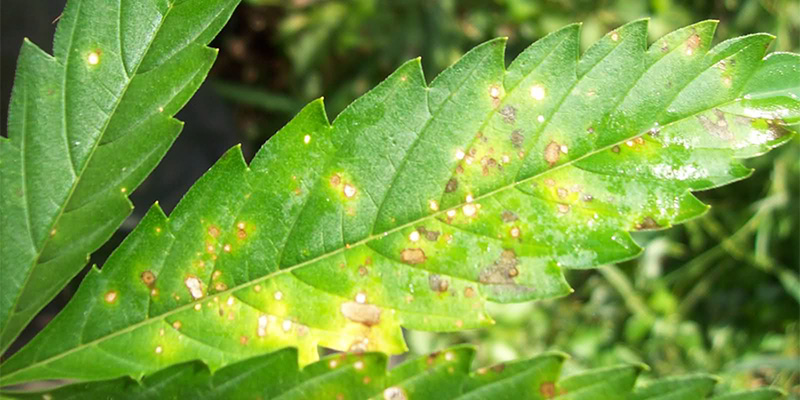
Leaf septoria is a fungal infection in cannabis plants. It first appears on lower leaves and causes leaf spotting and yellowing. The disease is typically caused by the fungus Septoria lycopersici. It occurs especially in summer, when high temperatures combined with rain or moisture from watering cause leaf dampness.
Untreated leaf septoria causes cannabis plants to show chlorosis symptoms, a condition that prevents leaves from producing enough chlorophyll. Although septoria does not destroy plants, the yield will be reduced. Early detection and intervention are essential because the disease can spread to other plants through wind, water, and insects.
How to Prevent Leaf Septoria in Cannabis?
It is always better to prevent diseases and pests than to solve them later. To prevent or reduce the likelihood of leaf septoria follow these steps:
-
Regularly clean the growing area, especially if growing indoors.
-
Space plants further apart to maintain moisture and reduce air humidity.
-
If growing indoors, maintain the correct room temperature.
-
Ensure sufficient fresh air circulation.
-
Regularly prune the plants.