
THC vs THCA: What's the Difference?
Have you ever heard of THCA, or tetrahydrocannabinolic acid? Most likely, you only know its offspring, THC. Although these substances would not exist without each other, there are quite a few fundamental differences between them. In today's article, we will introduce THCA to you in detail.
What is THCA?
Like many other cannabinoids, THCA also originates from the so-called "mother cannabinoid", often referred to as cannabigerolic acid, or briefly CBGA. Through many enzymes produced by hemp plants, CBGA is converted into other cannabinoid acids and subsequently into cannabinoids, such as CBG and further CBD, CBN, CBC, or THC.
Raw growing hemp is not psychoactive by itself. Essentially, it contains no THC or other cannabinoids, but it does have high levels of cannabinoid acids, including THCA. THC content slightly increases during harvesting, when the plant is dried and thus heated.
As we mentioned, THCA is initially "just" an acid. The "A" in the acid name indicates a carboxyl group, which is eliminated through the decarboxylation process. Behind this tricky term is basically just heating the given cannabinoid, or carboxyl acid. By removing the carboxyl group, the non-psychoactive THCA acid becomes the psychoactive cannabinoid THC.
If you are being treated for fibromyalgia, for example, your doctor may have offered you the option to try the effects of medical cannabis. Regardless of the prescribed cannabis strain, the important fact is that the plant is literally packed with THCA rather than THC. At least until you start vaporizing this herb. The vaporizer heats the cannabis flower and undergoes the aforementioned decarboxylation, converting THCA into THC.
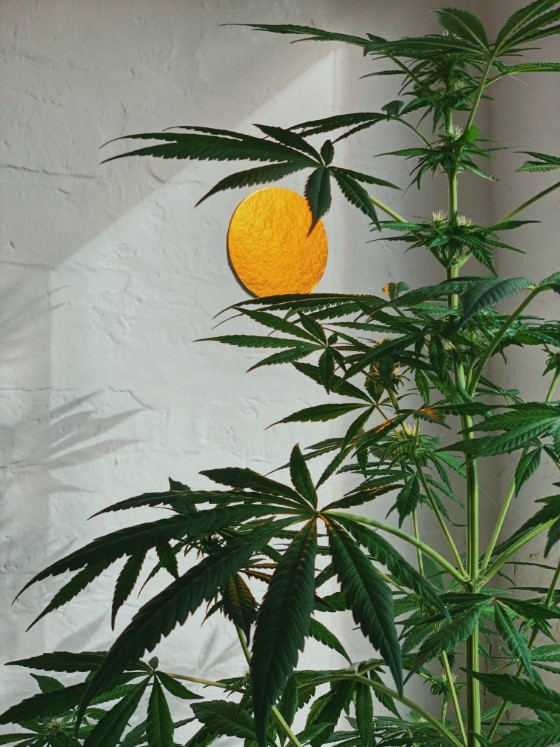
Raw growing hemp is practically non-psychoactive, as it mostly contains only cannabinoid acids, not cannabinoids.
THCA vs. THC Comparison
We've already discussed the cannabinoid acid THCA. Although THCA and THC may seem similar in some aspects, the opposite is true. In many ways, they are completely diametrically different. For a clearer overview, we've prepared a short comparison of the basic parameters that distinguish these 2 substances.
THCA Properties:
-
NOT intoxicating
-
Occurs completely naturally in raw growing hemp
-
Interacts very weakly with endocannabinoid receptors CB1 and CB2
-
Before decarboxylation, represents up to 90% of the total THC content in hemp plants
-
May have calming and neurological effects, similar to the cannabinoid CBD
-
Potential medical use is still the subject of many studies (see below)