
White Hemp and Albinos Among Plants
- Occasionally, an albino cannabis plant is born
- Albinism is a rare, but not unheard-of phenomenon in plants. There are numerous potential causes
- There are many theories and speculations about the cause of plant albinism
Albinism in Plants
Albinism is a very peculiar occurrence, especially in plants. As most of us know, plants produce energy from sunlight. The green color in plants is caused by the chlorophyll pigment. Not only does this pigment give plants their typical green coloration, but it is also vital for the plant's survival.
Chlorophyll is capable of absorbing specific wavelengths that the plant needs (from ultraviolet blue to red), while reflecting the unnecessary light - which is why we see the reflected light as the green color of leaves. As a result, the plant absorbs all the necessary light and converts the resulting energy into sugars, which it then uses for further growth - the well-known process of photosynthesis.
Albinos have no chlorophyll. This means they lack the pigment needed to convert light into energy.
Simply put, albino plants essentially lose the ability to respond to light correctly and are as if constantly in the dark. As a result, most such plants die before reaching maturity.
Currently, two potential causes for plant albinism are known:
1. Genetics
Just like in humans, albinism in plants is a very rare occurrence. Albinism is a recessive genetic trait in plants, which ultimately weakens them. Some plants may show signs of albinism as early as the seedling stage.
However, to be considered an albino, the plant doesn't need to be completely white. Some plants may exhibit signs of albinism only in certain parts of their body or on some leaves, which can be triggered by both genetics and environmental factors.
Interestingly, some plants can survive as albinos quite peacefully - for example, sequoias on the North California coast, which survive even without the process of photosynthesis.
To the researchers' surprise, these trees use a parasitic tactic to survive - they connect their roots to their parents' roots and feed on their microelements. Albino sequoias survive this way, but their structure and overall health are worse than their "normal" counterparts. Currently, scientists are investigating (purely out of curiosity) how to enable lifelong survival of albino cannabis plants.
The process of hybridizing different genetics can specifically trigger an albino expression in cannabis. In some cases, certain "over-bred" genetics are more susceptible to albinism.
2. Bleaching by Light
Light bleaching is a much more common occurrence compared to albinism. Some varieties are more prone to bleaching than others. However, bleaching is most common in plant parts that are too close to the light source. It's worth paying attention to this symptom during cultivation, as bleached parts of the plant lose their ability to photosynthesize and thus grow.
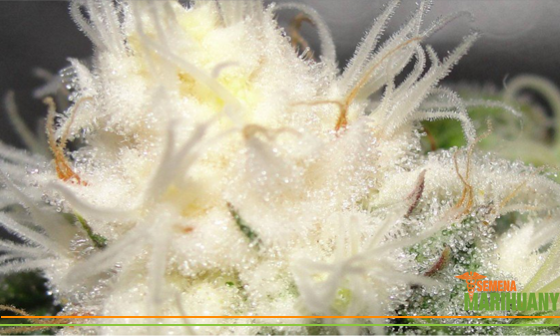
Is White Cannabis Quality?
If you've read this far, it's probably clear that the answer is simply "no". White cannabis simply cannot produce the same amount of energy as green, purple, or red plants. While you can help white plants by providing more nutrients, you will never achieve the same results as plants capable of normal photosynthesis.
What to Do When Plants Pale and Whiten
Whether bleaching is caused by lighting or a genetic defect, there are a few ways to extract as much as possible from the plant.
Very early research on this issue shows that it may be possible to help such plants by additionally supplying sugars. However, growth can still be abnormal and yield significantly limited. Without additional sugars, most albino plants die.
If bleaching is only showing on some parts of the plant, don't despair and you can add more fertilizer, which in most cases will keep the plant alive until the end and capable of producing at least some yield.
If bleaching is caused by lighting, the first step is to increase the distance between the light and plants. In a limited space, switching to LED lamps with lower wattage might be the solution.
If you encounter an albino at the seedling stage, the best solution is a merciless termination of growth. Albino cannabis simply cannot produce quality medicine with a balanced and thus therapeutically effective cannabinoid content.
Author: Delilah Butterfield
Translation: Filip Maral
Source: herb.co
Images: imgur growweedeasy
Similar Articles
- 4 Most Popular KUSH Varieties
- Medicinal Cannabis as a Helper Against Cough and Cold
- Cannabis as a Replacement for Tobacco, Alcohol and Other Drugs