
Why might coffee be the opposite of cannabis?
- The current study is based on an experiment where 47 participants were given 0-8 cups of coffee daily, followed by a blood analysis.
- Coffee and marijuana act on the body in areas where their effects overlap.
What do coffee and cannabis have in common? According to a new study, your morning cup causes a decrease in certain substances connected to the body's marijuana response system.
The amount of these metabolites occurring in the endocannabinoid system decreased in people who drink 4 to 8 cups of coffee daily, according to a study published on March 15, 2018 in the Journal of Internal Medicine.
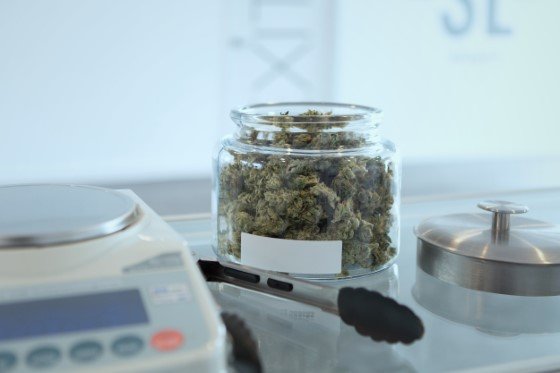
Endocannabinoids are molecules that bind to cannabinoid receptors found throughout the nervous system, as well as in immune and endocrine tissue. The body creates its own endocannabinoids, but also reacts to foreign cannabinoids, such as those found in Cannabis plant leaves.
Coffee suppresses endocannabinoid chemicals that marijuana smoking increases, said Marilyn Cornelis, assistant professor of preventive medicine at Northwestern University's Feinberg School of Medicine, who led the new research.
This could theoretically mean that coffee can invoke opposite effects to cannabis on the endocannabinoid system, Cornelis told Live Science.
Coffee in Blood
The research recorded coffee's sensations and behaviors by tracking the rise and fall of chemicals in the blood after coffee consumption. Endocannabinoids were just one group of chemicals – or metabolites – where researchers found changes.
The coffee mixture changed 115 different metabolites in the blood. 34 of these metabolites don't even have a name or known role in the body. Another 82 known metabolites play a role in 33 different biological processes.
Cornelis and her team focused on 5 of these specific biological processes where numerous metabolites seemed to cluster. Two pathways were expected: One was xanthine metabolism – a set of processes involving caffeine metabolism, which made sense because the body naturally metabolizes caffeine after consumption. The second pathway was benzoate metabolism, which involves breaking down other compounds in coffee called polyphenols. These compounds are broken down by microbes living in the intestine, Cornelis says.
We have increased control over the gut microbiome due to its role in health, she said.
But the real surprises were three other metabolic processes never before associated with coffee. Endocannabinoids were grouped in one of these processes.
"What we see here is that systems affected by coffee and cannabis overlap," Cornelis said. "This could mean that drinking coffee combined with marijuana in your system might create interacting effects."
Although the nature of these interactions is not yet clear. Typically, endocannabinoids that decrease with coffee also decrease when the body is under stress. It's possible that the amount of coffee participants drank (4-8 cups daily) caused stress, leading to a drop in endocannabinoid levels as a protective measure.
Cornelis and her team further discovered that coffee consumption increases steroid metabolite concentrations in the blood, possibly because coffee contains plant steroids called phytosterols. "Specifically, the metabolites that increase are associated with steroid excretion, so it's possible that coffee could increase steroid breakdown in the body. (Higher steroid breakdown would lead to greater steroid excretion)."
What this finding means for human health remains a mystery. Some steroid processes are linked to certain types of cancer, Cornelis says, and the connection between coffee itself and cancer is blurry, so the steroid findings could provide a new avenue for understanding whether coffee consumption affects a person's likelihood of developing cancer.
"The final cluster of metabolites changed by coffee consumption consisted of acylcholine fatty acids that may be associated with the endocannabinoid pathway. But the changes are the most mysterious of all. It's a new set of metabolites we really can't explain," Cornelis added.
Coffee and Health
The fact that the study raises more questions than answers is not surprising. Cornelis went into the research to find new connections between coffee and health. "A lot of research relates to drinking coffee and health effects – so much that headlines in magazines like 'Coffee is Good for You/Coffee is Bad for You' are almost a cliché."
"But those are just statistical data. The goal of my research is to understand the causal reasons connecting coffee to these results."
The current study is based on a years-old clinical trial conducted in Finland, where 47 people who regularly drank coffee were asked to not drink coffee at all for one month, drink 4 cups daily the next month, and consume 8 cups daily in the final month of the study.
All participants drank the same medium-roast Arabica blend, which is also the most popular coffee type in the United States. Cornelis and her team used the blood of these participants to test 733 metabolites.
The same individuals were also tested for changes in their lipid and protein levels, which Cornelis continues to study. She also hopes to use additional data from large population studies containing coffee consumption data to determine if the same metabolites change in a broader population.
"It would be interesting to find out if some genetic differences play a role in the response to coffee," she said.
Sources:
Pappas, Stephanie. "Why Coffee Could Be the Opposite of Cannabis." LiveScience, Purch, 15 Mar. 2018, www.livescience.com/62034-coffee-cannabis-opposite.html.
Author:
Stephanie Pappas