
Benefits of Coconut Cultivation
Coconut Medium
It is offered as peat in bags, but can also be found in the form of pressed brick cubes. Coconut fiber has many unique physical and chemical properties that truly make it an ideal growing medium. Coconut substrates interact with nutrients.
Coconut Substrate
Maintains stable calcium and magnesium values and slowly releases potassium and nitrogen. For this reason of coconut fiber's uniqueness, there are fertilizers on the market specifically designed for growing in this medium. Such fertilizers contain much less potassium, less sulfate, and more calcium and magnesium than standard fertilizers intended for soil cultivation.
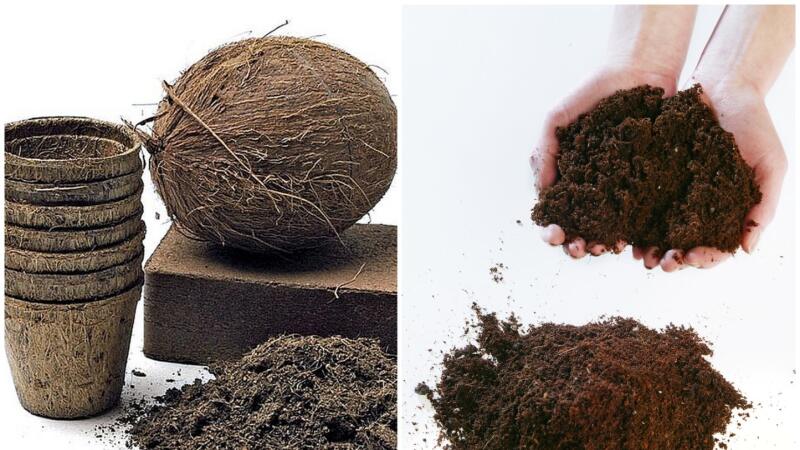
Only high-quality nutrients suitable for coconut will ensure that your plants absorb all the nutrients and chemical elements necessary for their strong and healthy growth. Coconut fiber is also an ideal means of supporting a plant's healthy root system. It can develop the plant's roots to their full potential, especially due to high levels of aeration and naturally occurring positive bacteria.
Coconut nuts naturally have a high content of natural chemical compounds called lignins. This compound can support the development of beneficial bacteria in the growing medium, which ensures a lower likelihood of harmful bacterial infection. Other organisms "Mycorhizae" and "Trichoderma" can increase overall plant performance and especially their total yield. "Mycorhizae" are beneficial fungi that colonize the root surface and help the system better absorb nutrients. "Trichoderma" bacteria work in symbiosis with plant roots and protect them from invasion by pathogenic fungi, such as "Pythium" or "Fusarium".
Our tip:
When watering, use water purified through reverse osmosis (RO), which removes harmful chemical substances that can kill beneficial microorganisms. Tap water often contains chlorine and chloramine, which kill both harmful and beneficial bacteria indiscriminately.
Reverse osmosis can remove up to 99.9% of impurities from water including phosphates, nitrates, minerals, and heavy metals. All plant-beneficial microorganisms will thrive better if we remove these harmful substances from regular municipal tap water. However, reverse osmosis guarantees a solution so pure that it is devoid of even basic trace elements and minerals normally present in water, so these substances must be added back to the nutrient solution with special means. For example, calcium and magnesium. These chemical compounds are naturally attracted to coconut fiber, which causes their further deficiency for the plant. As compensation for this deficiency, it is important to add any form of calcium and magnesium as a supplement to the nutrient solution, especially when using the aforementioned reverse osmosis.
Coconut and Environmental Acidity
The balancing process of acidity is necessary if we want to achieve optimal nutrient absorption into the plant's root system. In coconut, adjusting the acidity or alkalinity of the growing environment is very easy. The exact pH values of fresh coconut medium are usually indicated by the manufacturer on the product packaging. Values are typically in the range of 6.0 to 6.5. Changing pH in coconut is not as difficult as it can be with regular soil. You only need to rinse the coconut fiber 1-2 times with water of adjusted pH. This medium is very sensitive to the acidity of the water used, which gives growers quick control over these values.
Oxygen in Coconut
Classic soil tends to become more settled and finer over time, especially if watered for a long time directly into pots. Soil clumps quickly break down, so very fine soil particles that retain the most moisture create dense spots. Less and less air penetrates the soil, resulting in insufficient oxygenation of the root system. Soil settled at the bottom of the pot can also become a very hostile environment for roots, as they begin to suffocate in their surroundings. Coconut medium never collapses, and internal spaces remain well-ventilated throughout.
Coconut Fiber Recycling
Another advantage of growing in coconut is that it can be reused. Since coconut fiber is fully recyclable, you can achieve up to three growing cycles from one package of coconut. Before reusing this medium, we recommend removing all visible root fragments, decomposing leaves, and other dead vegetation residues.
Main Advantages of Growing in Coconut
Growing in coconut offers excellent results for growers and this method is comparable to most hydroponic systems. It is a great alternative for soil growers willing to experiment a bit. Pure coconut fiber can be mixed into classic soil substrate.
- Supports strong root growth and plant vitality.
- Coconut fiber is completely environmentally friendly.
- Concentrates beneficial bacteria and discourages harmful ones.
- It is 100% energy from renewable sources.
- Coconut has ideal acidity (pH) in the range of 6.0 to 6.8.
- Coconut fiber is very airy.
- High natural cellulose content.
- Coconut fiber is odorless, easy to handle, and has uniform composition.
- Contains significant amounts of natural phosphorus (10-50ppm) and potassium (150-450ppm).
 Cannabis / marijuana seeds are intended exclusively for collection purposes! Cultivation of plants with higher THC content is an offense or a criminal act! More here