
How long does cannabis stay in the body?
CBD vs. THC
Few people know that cannabis contains several hundred active compounds. However, the two most well-known are tetrahydrocannabinol (THC) and cannabidiol (CBD).
While THC is primarily obtained from the flowering part of the cannabis plant, with a THC content higher than 0.3%. CBD is extracted from industrial hemp, which contains less than 0.3%. The content of these active substances is important mainly from a legislative perspective, as THC > 0.3% is illegal in the Czech Republic.
Basic Comparison of THC & CBD:
-
THC is the main psychoactive component of marijuana, with strong psychoactive and intoxicating effects. It is available in oils, tinctures, capsules, or as flowering buds meant for smoking as marijuana. Common cannabis is legally available only by prescription, and in very limited quantities.
-
CBD is a compound naturally occurring in cannabis plants. Unlike THC, CBD products with THC content less than 0.3% are completely legal and have no psychoactive or intoxicating properties. They have a therapeutic, relaxing, and calming effect. In fact, studies confirm that CBD can significantly reduce the psychoactive effects of THC. It is sold in the form of gels, oils, extracts, dietary supplements, tinctures, chewing gums, and other treats, but also as traditional dried cannabis with medicinal properties.
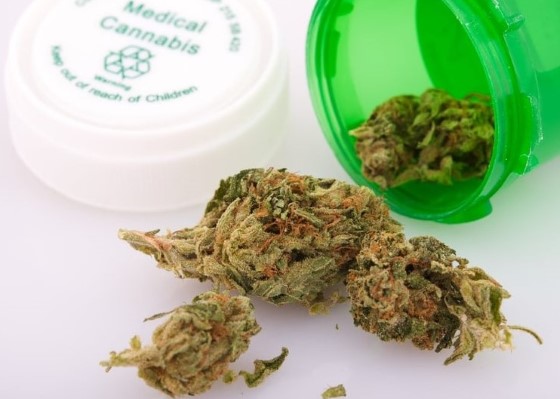
Medicinal cannabis, source: vitalia.cz
How Long Do Active Substances Stay in the Body?
Ryan Vandrey, associate professor of psychiatry and behavioral sciences at Johns Hopkins University, states: "The time during which a drug can be detected in the body is highly variable, depending on each individual and the frequency and amount of use."
Metabolism plays a crucial role in processing cannabis at different rates. Even two people of the same gender and age, using the same amount of cannabis at the same frequency, will have different bodily reactions. The final THC level in the blood is influenced by countless factors, such as lifestyle, dietary habits, weight, and various physical activities and sports.
Ryan Vandrey, associate professor at Johns Hopkins University, further claims: "...there is no reliable way to predict or definitively determine how long a substance could be detected in the body."
A 1989 study examined the maximum time THC could be detected in the body of regular cannabis users. Testing was conducted through blood samples. It showed that the maximum period was 25 days. However, the research emphasized that only one subject tested positive for drugs even after 14 days. For other participants, it took an average of just 9.8 days before no cannabinoid levels could be detected.
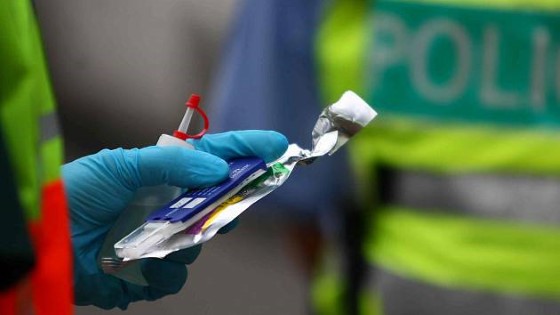
Test kit for roadside drug screening, source: denik.cz
Where Can Cannabis Be Detected Through Tests?
Currently, there are quite a few ways to test for the presence of drugs, specifically THC, in the human body. As mentioned, testing can be influenced by factors such as metabolism speed and functionality, hydration, physical condition, weight, and much more. The detection time periods below are therefore only approximate. Testing methods are divided by the type of "samples" analyzed - urine, blood, hair, and saliva.
1. Urine Tests
This method is the most widespread. However, it can only detect the presence of THC-COOH, a non-psychoactive metabolite of THC, and is therefore slowly becoming obsolete. Moreover, this metabolite can only be found in urine in cases of regular marijuana use, where it can remain for more than 2 months. If cannabis is used occasionally, it can be detected for approximately one week.
2. Blood Samples
Blood sample testing analyzes the presence of THC directly, not THC-COOH. It is therefore a more frequently used method for detecting psychoactive cannabis components. Blood tests are somewhat more accurate in determining the time of intoxication by the substance. THC remains in the blood for approximately 2-7 days, both for occasional and regular users.
3. Hair Follicle Tests
This testing method is used very rarely. It is a relatively expensive analysis method requiring special equipment. However, testing THC in hair follicles offers the longest "detection window", which is up to 90 days from last use. Despite this, the two methods mentioned above are much more commonly used, especially due to speed and lower cost.
4. Saliva Analysis
Saliva analysis is perhaps the least reliable testing method. It is primarily used by police and other security forces as a quick "preliminary" drug test. In other words, if you test positive in a saliva test, you will be taken to the hospital for a blood sample to determine if you are actually under the influence of THC. It should be added that with occasional THC use, this substance is detectable in saliva for only about 24 hours. CBD is very difficult to detect by this method.