Introduction to the Endocannabinoid System
- The endogenous cannabinoid system is absolutely essential for individual health
- Studies continuously confirm its immense importance
- Thanks to this system, cannabinoid substances have healing effects
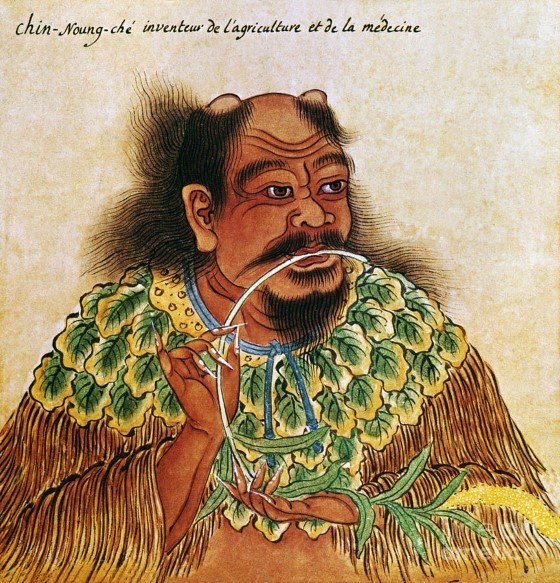
Medical cannabis is truly a historical medicine. Reports of its use can be found, for example, in the history of ancient China, where, according to Chinese legends, Emperor Shen Neng "prescribed" it as a tea ingredient almost 3000 years before Christ. Patients suffering from rheumatism, malaria, or poor memory could then brew a completely fear-free medicinal cannabis tea. It was from China that cannabis gradually spread throughout the world, and one of the most important things we can thank for this is our endocannabinoid system, which allows medical cannabis to act in synergy with our body.
In this article, we will try to describe this system as best as possible and at least partially illuminate the mechanism by which cannabis is able to treat such a wide spectrum of diseases and conditions.
History of the Endocannabinoid System
From sea squirts, through tiny nematodes and further, all species of today's vertebrates on our planet share this endogenous cannabinoid system, which allows us to constantly adapt to the changing external environment. Current science estimates that this system evolved in primitive animals about 600 million years ago.
You might think that we now know everything about the endocannabinoid system from A to Z. Since the discovery of this system in the mid-1990s by Israeli doctor Raphael Mechoulamem (who, by the way, was the first to identify and name THC), just over 20 years have passed. In these twenty years, more than 20 thousand scientific publications on this topic have been published, which is about 2 studies per day (!). However, the truth remains that even this number of studies is only a glimpse into the entire issue of the endocannabinoid system.