How to Grow Autoflowering Seeds - Complete Week-by-Week Guide

Autoflowering Cannabis Genetics: Revolution in the Cannabis World

Autoflowering cannabis genetics represent a breakthrough in the development of cannabis strains. This innovative self-flowering genetics originated from crossing Cannabis sativa and indica with Cannabis ruderalis, a wild subspecies from Central Asia and Eastern Europe.

The unique characteristic of this genetics lies in its automatic flowering process. While traditional photoperiodic strains depend on light cycles, autoflowering plants develop their flowers based on age and physiological maturity.

Genetic Origin and Development

Cannabis ruderalis evolved in extreme climates where short summers left no time for long vegetative phases. This natural selection led to plants that initiate their reproductive phase regardless of day length.

Modern breeders have successfully integrated this trait into high-quality genetics, combining the robustness of Ruderalis with the potency and aromatic complexity of Sativa and Indica strains.

Characteristic Traits of Autoflowering Strains

Life Cycle and Timeline

Autoflowering genetics complete their entire life cycle in 8-14 weeks, depending on the specific strain and environmental factors. This shortened cycle allows for multiple harvests per season.

  • Germination phase: 1-3 days until root development
  • Vegetative phase: 3-5 weeks of leaf development
  • Flowering transition: Automatic between weeks 4-6
  • Maturation phase: 6-9 weeks until full development

Morphological Characteristics

This genetics develops into compact, bushy plants with average heights between 40-120 centimeters. Their limited size makes them ideal for discreet cultivation and spaces with height restrictions.

The root structure of autoflowering strains is designed for rapid development, with extensive branching that enables efficient nutrient uptake within the shortened lifespan.

Cannabinoid and Terpene Profiles

CBD-Dominant Autoflowering Genetics

Modern CBD autoflowering strains offer therapeutic cannabinoid profiles with minimal psychoactive effects. This genetics combines the benefits of cannabidiol with the practical aspects of self-flowering traits.

Popular CBD autoflowering lines frequently show:

Aromatic Complexity

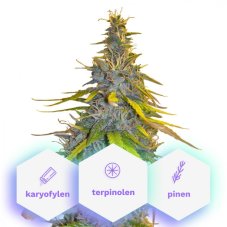
Despite their compact growth, autoflowering strains develop rich terpene profiles. Dominant terpenes such as myrcene impart earthy undertones, while limonene contributes citrus accents and pinene brings fresh pine notes.

Environmental Factors and Optimization

Light Management

Autoflowering genetics tolerate flexible light schedules without flowering interruption. Many growers use 18-20 hours of light throughout the entire cycle for maximum photosynthesis and development.

This genetics shows remarkable tolerance to:

  • Light interruption during dark phases
  • Variable intensity without stress
  • Various light spectra (LED, HPS, natural sunlight)

Nutrient Requirements

Autoflowering strains require adapted nutrient schedules due to their rapid development and compact growth form. Over-fertilization can easily lead to nutrient stress and reduced performance.

Optimal nutrient supply is characterized by:

Practical Applications and Benefits

Commercial Production

Autoflowering genetics are transforming commercial cannabis production through increased efficiency and predictability. Their short cycles enable more frequent harvests and improved cash flow for producers.

Industrial advantages include:

  • Predictable harvest windows
  • Lower labor costs through simpler management
  • Lower energy costs per cycle
  • Consistent quality through stable genetics

Research and Development

Scientific interest in autoflowering mechanisms contributes to broader cannabis research. Studies on genetic expression and flowering induction mechanisms are deepening our understanding of cannabis biology.

Current research focuses on:

  • Epigenetic factors in flowering timing
  • Optimization of cannabinoid biosynthesis
  • Improvement of stress resistance
  • Maximizing terpene production

Selection and Quality Criteria

Genetic Stability

High-quality autoflowering genetics show consistent characteristics across multiple generations. Reliable seedbanks invest in extensive stabilization programs to ensure uniformity.

Quality indicators include:

  • Uniform germination rates (85%+)
  • Predictable flowering behavior
  • Consistent morphology
  • Stable cannabinoid profiles

Adaptability and Resilience

Superior autoflowering strains demonstrate remarkable adaptability to different environments and cultivation methods. This flexibility makes them suitable for both beginners and experienced growers.

The robust nature of this genetics is evident in its resilience to temperature fluctuations, humidity variations, and minor nutrient imbalances, making it ideal for various climatic conditions.

recommended products8